Grow guide · Pot sizes
What size pot does my plant need?
Too small and the plant dries out and stops growing. Too big and the extra soil stays wet and rots the roots. The right size is easy to work out with a tape measure.
Updated

The short answer
- Measure straight across the top of the plastic pot your plant came in.
- Choose a pot 2 to 4 cm wider. Fast growers can go up to about 5 cm; succulents and orchids want it snug.
- Bigger isn’t kinder: extra soil stays wet and rots the roots.
- Repot in spring, when roots poke out of the drainage holes or water runs straight through.
Step by step
How to measure.
You need a tape measure or ruler and the plant in its nursery pot. It takes a minute.
1. Measure across the top
Measure the nursery pot from rim to rim, straight across the middle. Most are 100 to 200 mm.
2. Add 2 to 4 cm
That’s the width of pot to look for. A plant in a 120 mm pot suits a 15 cm pot.
3. Check the height
Long-rooted plants, like parsley, want a deeper pot. Shallow-rooted succulents are happy in a shallow one.
4. Check the drainage
Make sure water can get out. Every pot in our guides drains; vases don’t.
Keeping the plant in its plastic nursery pot inside ours? Use the same rule, 2 to 4 cm wider, so it slips in easily and lifts out to water.
By type of plant
Rules of thumb.
Succulents and cacti
- When to repot
- Every two to three years, in spring.
- Good to know
- Too much soil stays wet for days, and succulents rot. Use cactus and succulent mix.
- Pot
- Snug: only 1 to 2 cm wider than the root ball.
Herbs
- When to repot
- Usually once, when you bring them home; most herbs are replaced every year or two.
- Good to know
- Small pots dry out quickly in summer, so don’t go smaller than 15 cm.
- Pot
- About 15 cm across for one herb; 20 cm for rosemary or two herbs together.
Trailing plants
Devil’s ivy, hoya, heartleaf philodendron
- When to repot
- Every one to two years, in spring.
- Good to know
- A hoya flowers best when it’s slightly pot-bound, so don’t rush it into a bigger pot.
- Pot
- 2 to 3 cm wider. They like being a little snug.
Upright leafy plants
Peace lily, calathea, ZZ plant, snake plant
- When to repot
- Every one to two years; ZZ and snake plants every two to three.
- Good to know
- A peace lily that wilts a day or two after watering is often root-bound and ready for the next size.
- Pot
- 2 to 4 cm wider.
Fast growers
Spider plant, monstera, Boston fern
- When to repot
- Every spring while they’re growing fast.
- Good to know
- Going up one size at a time is better than one giant leap.
- Pot
- Up to about 5 cm wider.
Orchids
Moth orchid (Phalaenopsis)
- When to repot
- Every two years or so, after flowering.
- Good to know
- Keep it in a clear plastic pot inside a decorative one, so you can see the roots: silver means dry, green means wet.
- Pot
- The same size or 1 cm wider, in orchid bark, not soil.
Repotting
How to move up a size.
Water the day before
A moist root ball slides out of its old pot more easily and settles in better.
Get fresh potting mix
Indoor mix for houseplants, herb and vegie mix for herbs, cactus mix for succulents, bark for orchids.
Ease it out
Turn the pot on its side, squeeze or tap it, and slide the plant out. Gently loosen roots circling the bottom.
Set it at the same depth
A little fresh mix in the bottom, the plant at the same level it was before, then fill around the sides and firm gently.
Water and drain
Water well, let it drain, and keep it out of hot sun for a week while it settles. Hold off on fertiliser for a month.
Check your plant
Signs it’s time to repot.
Roots are coming out of the drainage holes.
The clearest sign. Move it up one size in spring.
Water runs straight through and the soil stays dry.
The pot is packed with roots and there’s little soil left to hold water. Time for the next size.
It wilts a day or two after watering.
Too many roots for the soil to keep up with. Repot, or water more often until spring.
It keeps tipping over.
The plant has outgrown its pot. A wider pot, one size up, gives it a steady base.
It stopped growing in spring and summer.
If light and watering are right, it may be root-bound. Check the roots: a solid mat means it’s time.
Pots that suit
Our pots, and their sizes.
Small is about 10 cm across, Medium about 15 cm and Large about 20 cm; each product page has the exact size. Every pot here drains.
-
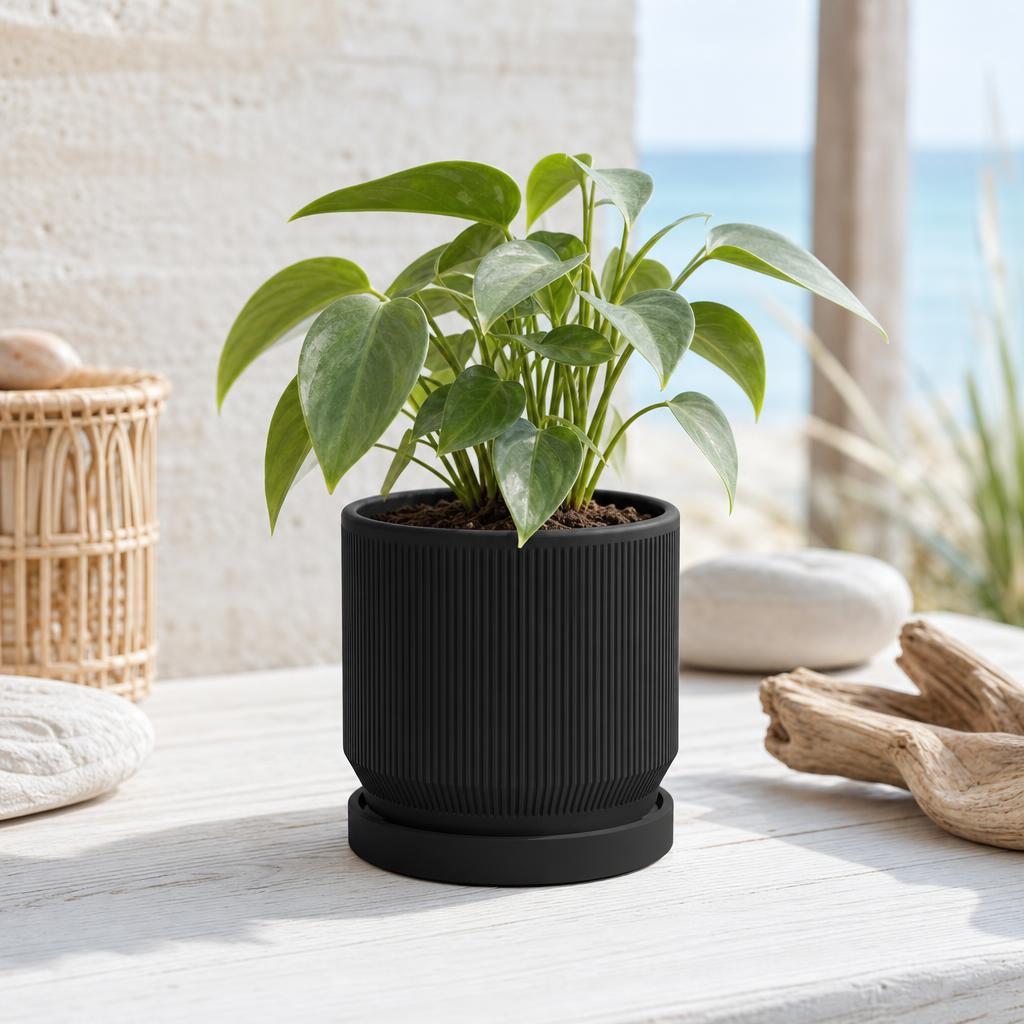
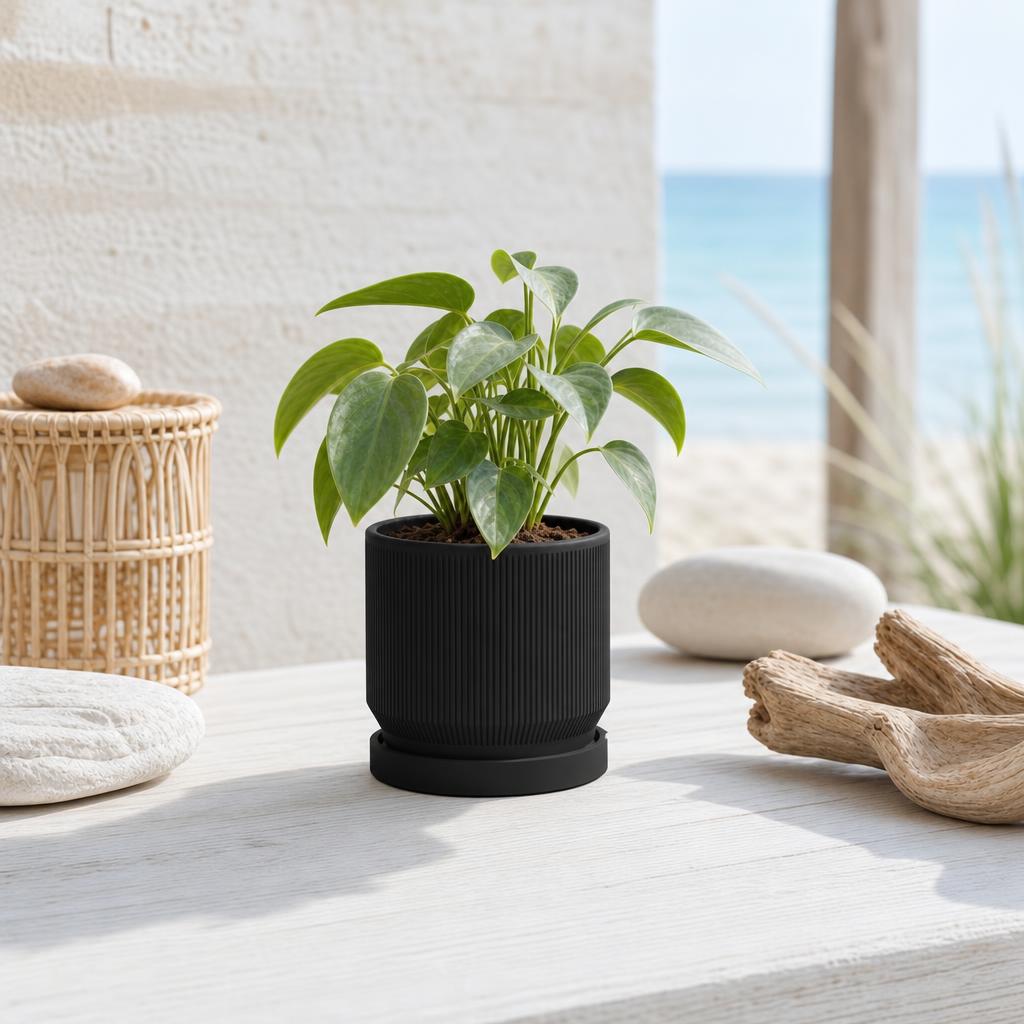
Indoors & outdoors
Mid Century Modern Ribbed Planter with Tray
+5Drip tray
-
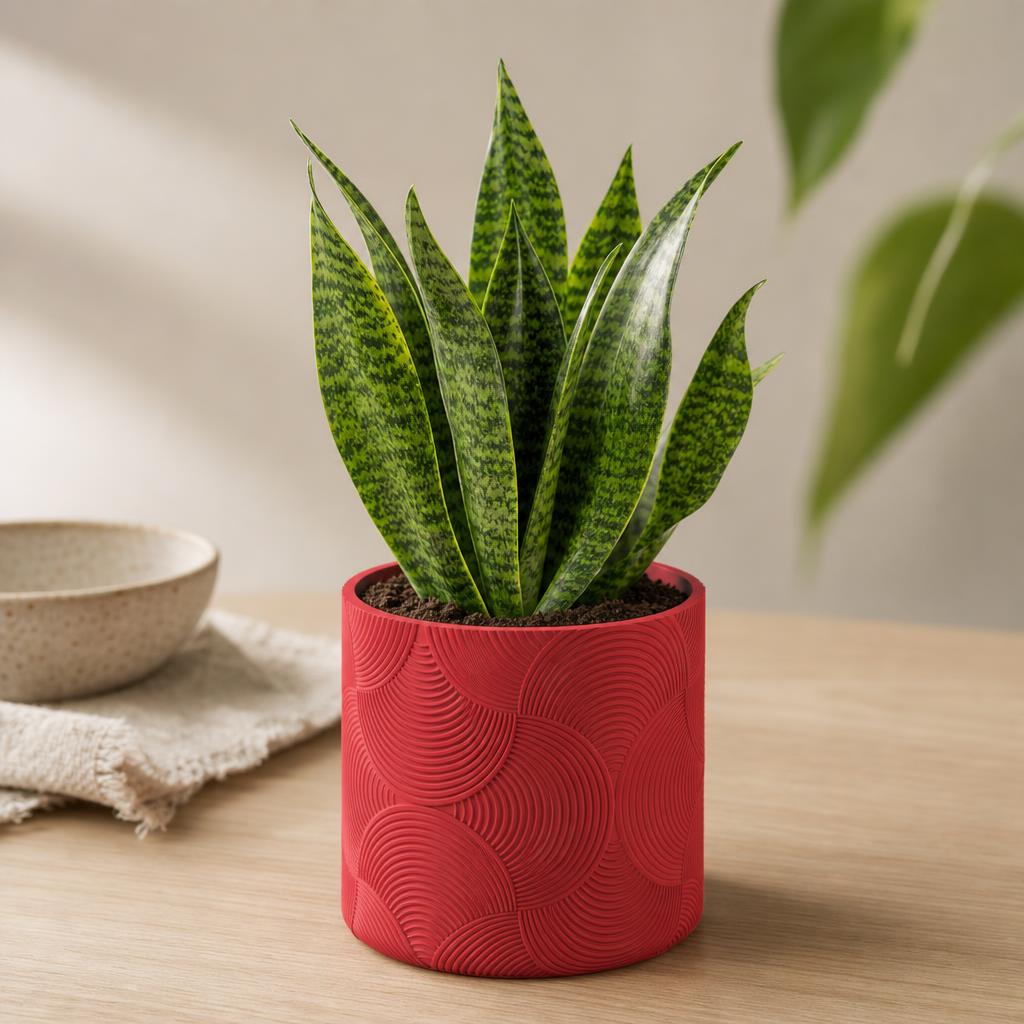
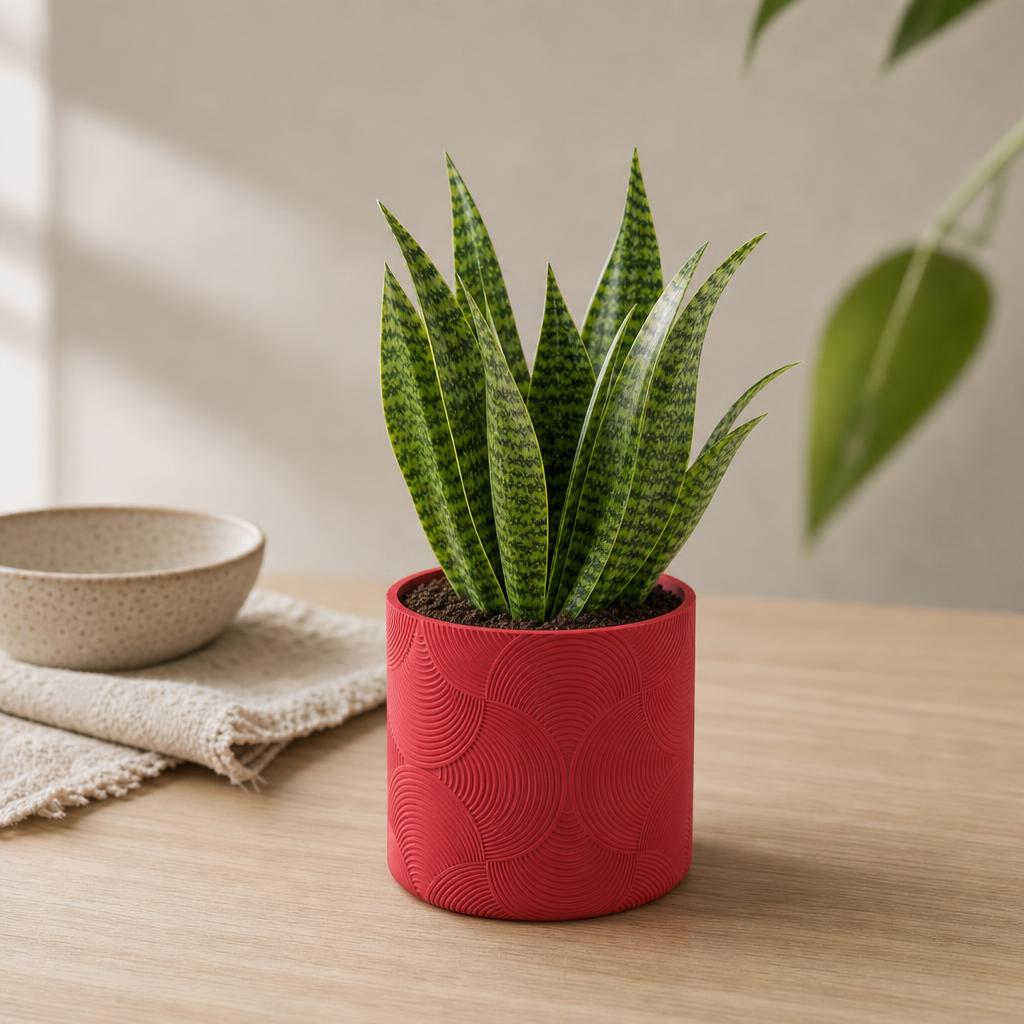
Indoors & outdoors
Boho Desktop Plant Pot with Hidden Drip Tray
+8Drip tray
-
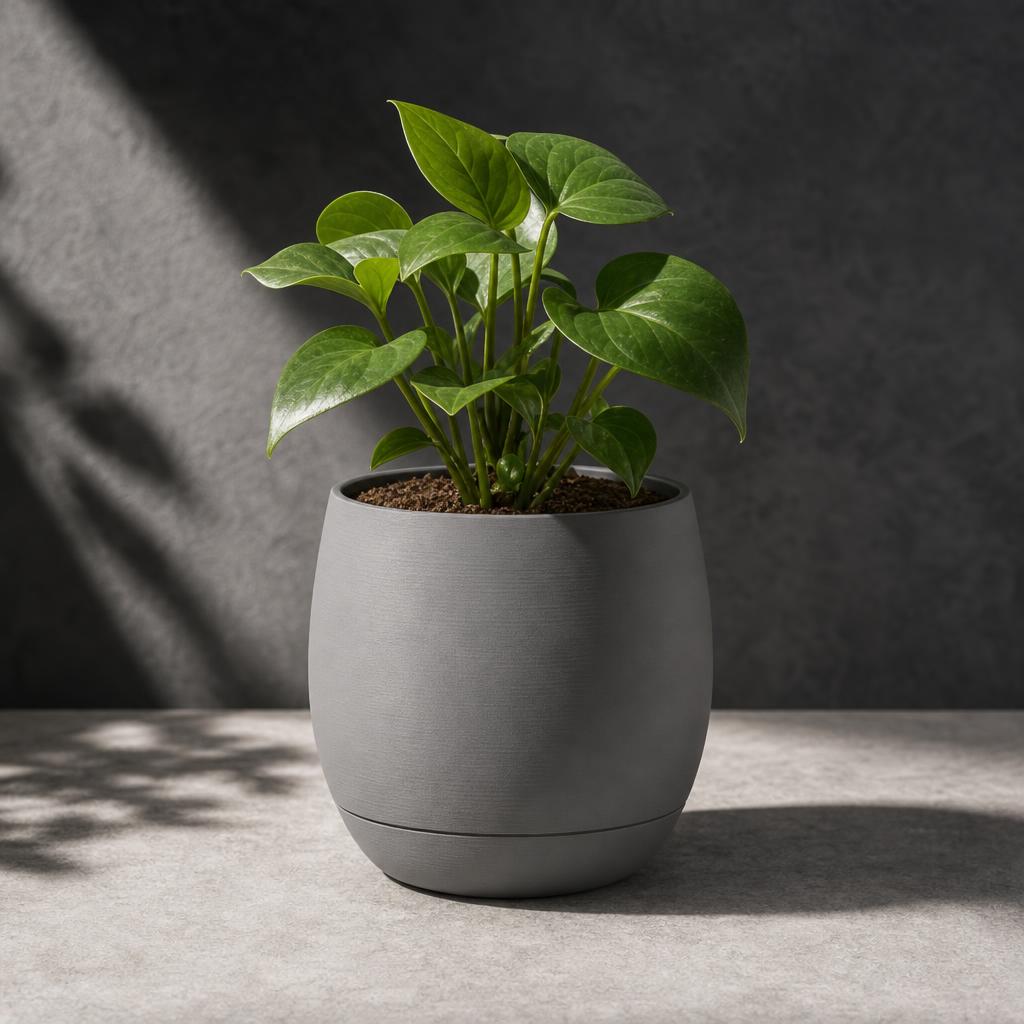
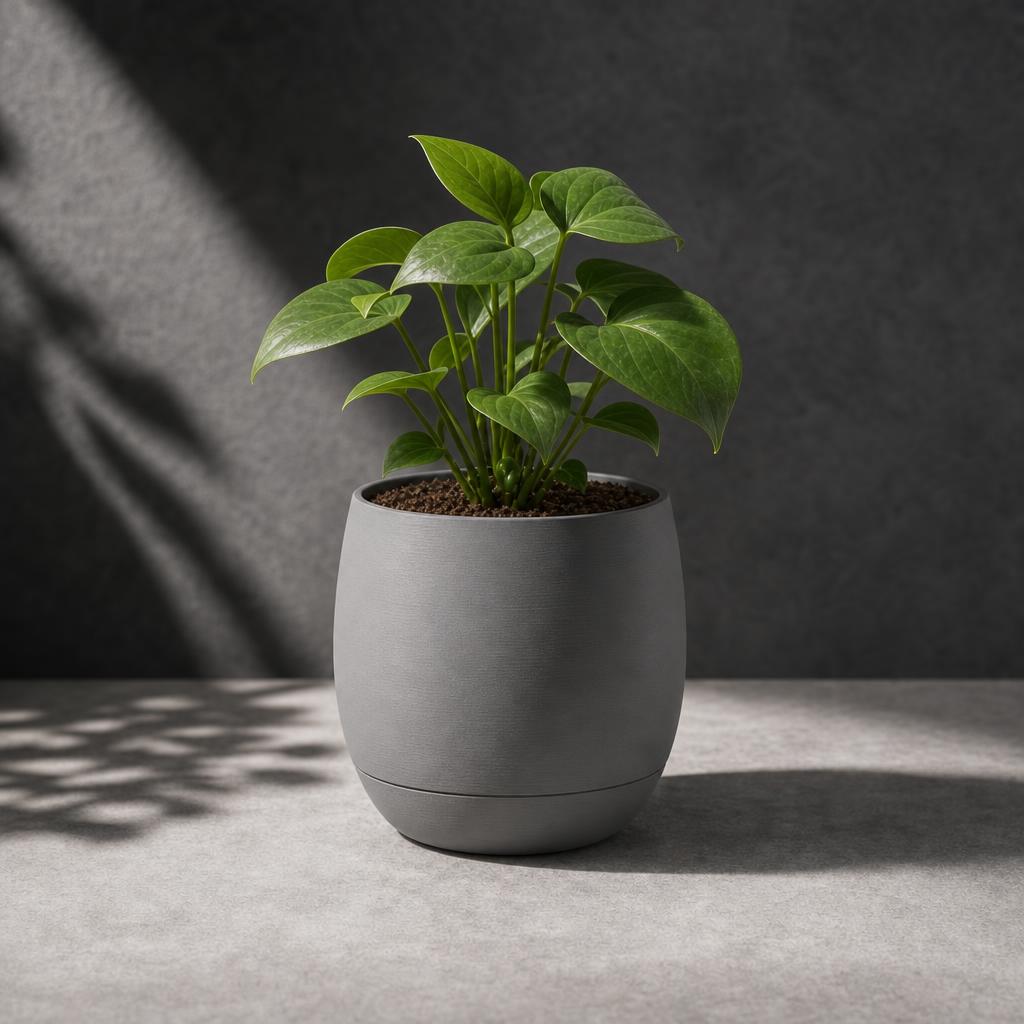
Indoors & outdoors
Aurex Indoor Plant Pot with Drip tray
+7Drip tray
-
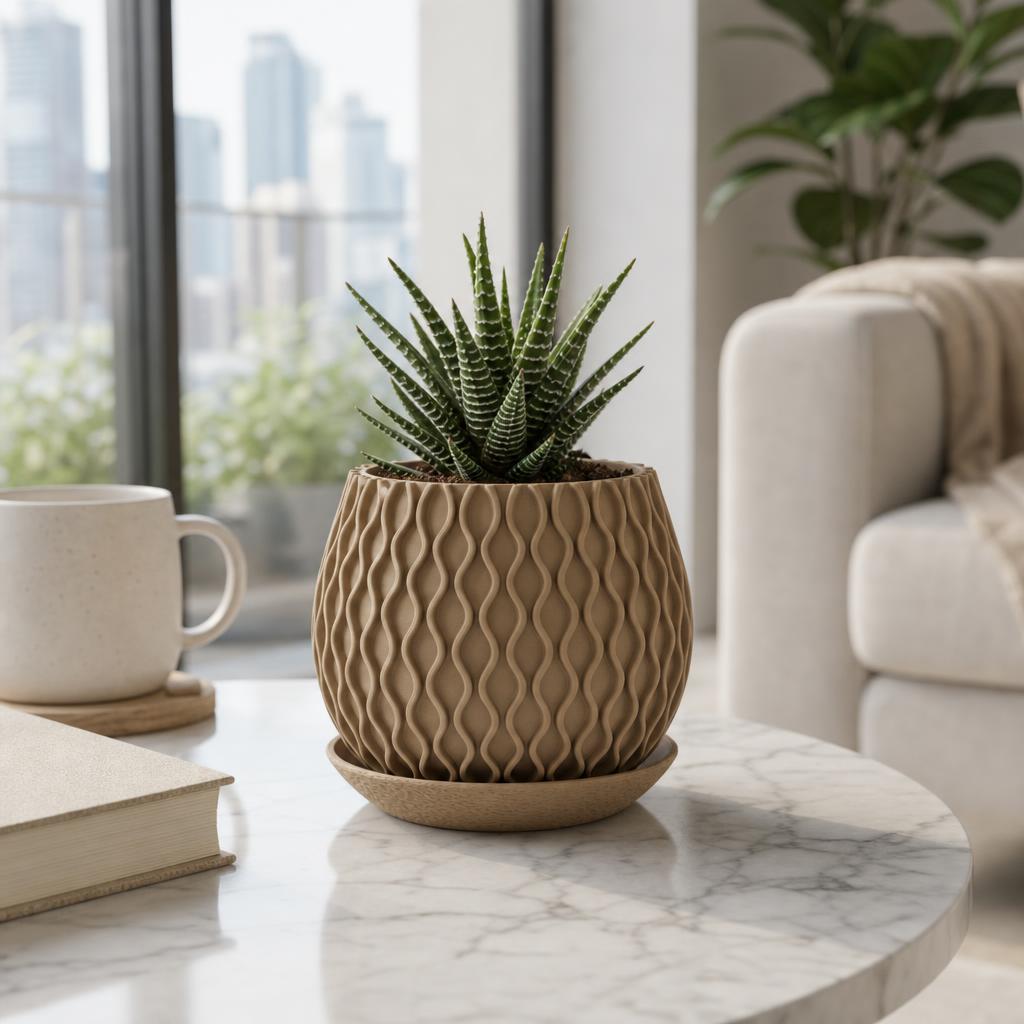
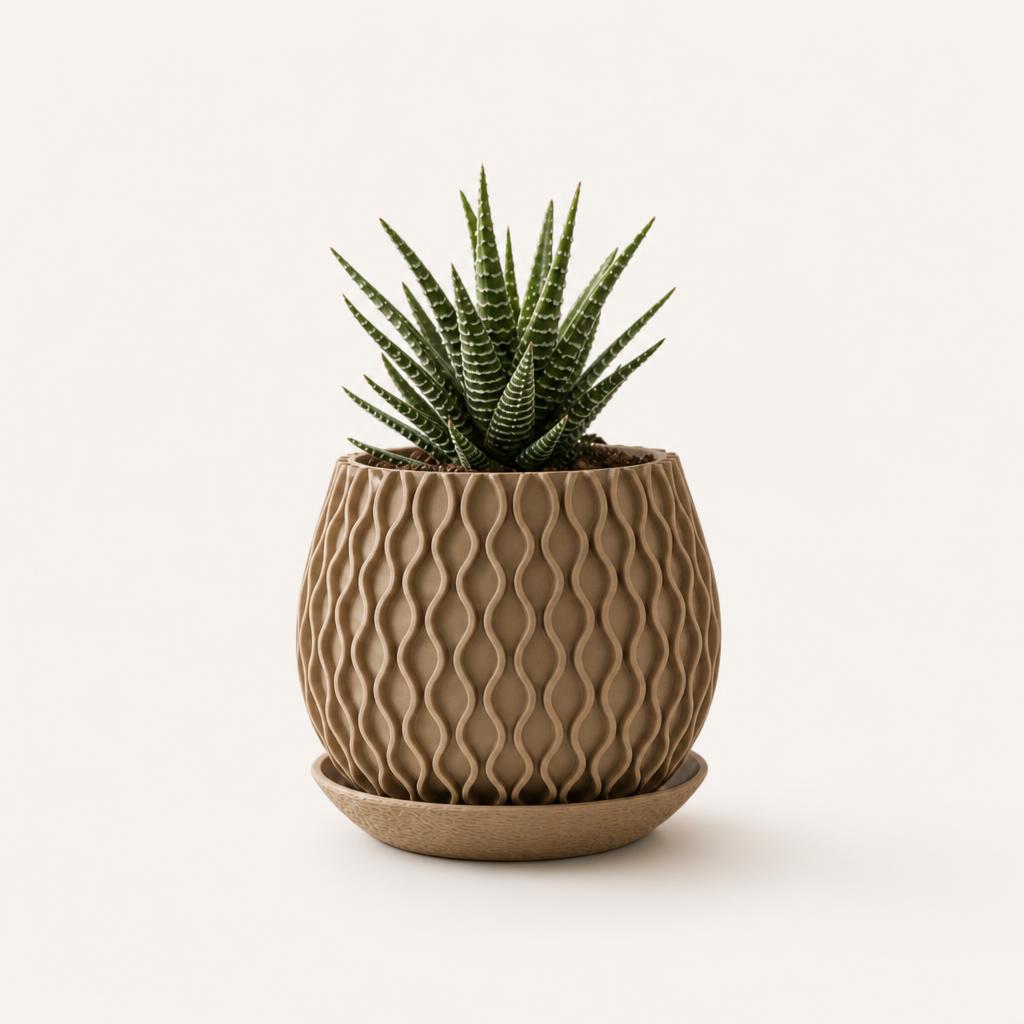
Indoors & outdoors
Hertz Decorative Wave Plant Pot with Drip Base
+8Drip tray
-
Indoors & outdoors
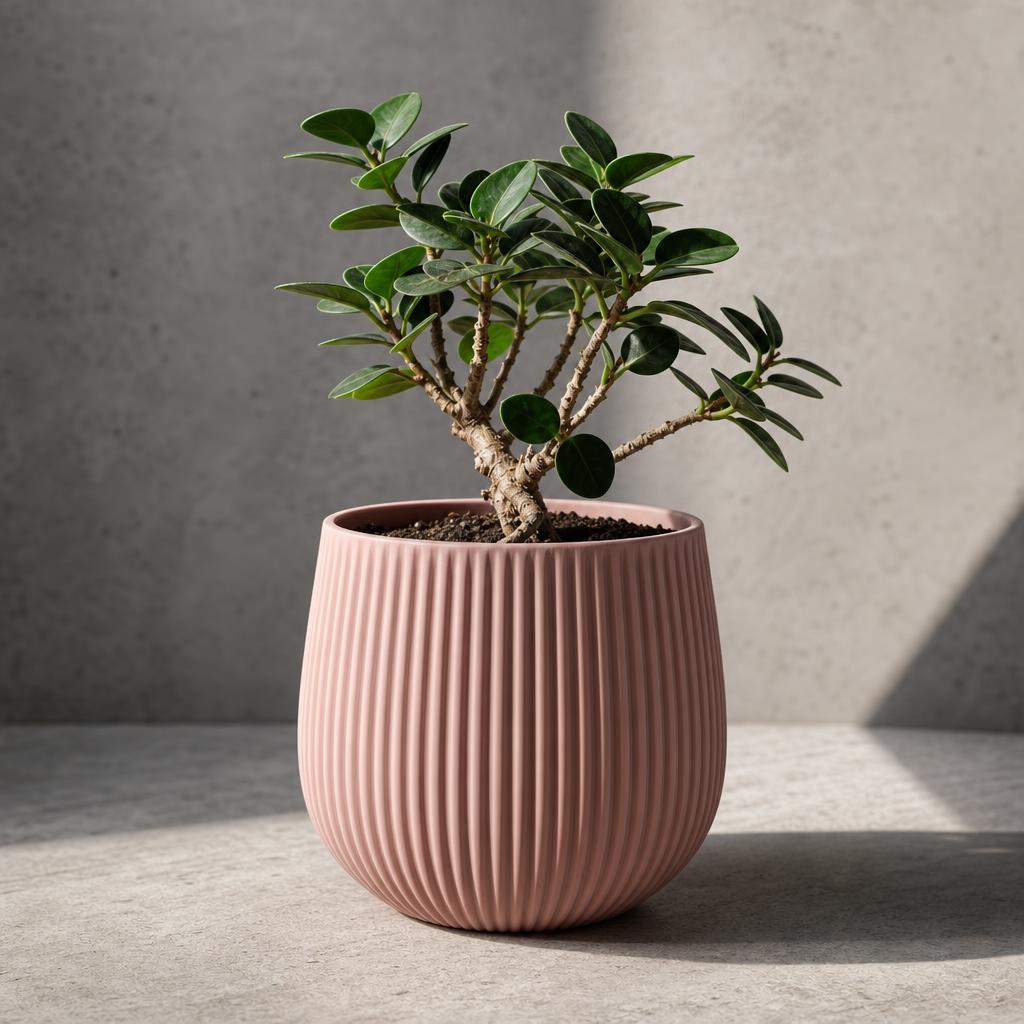
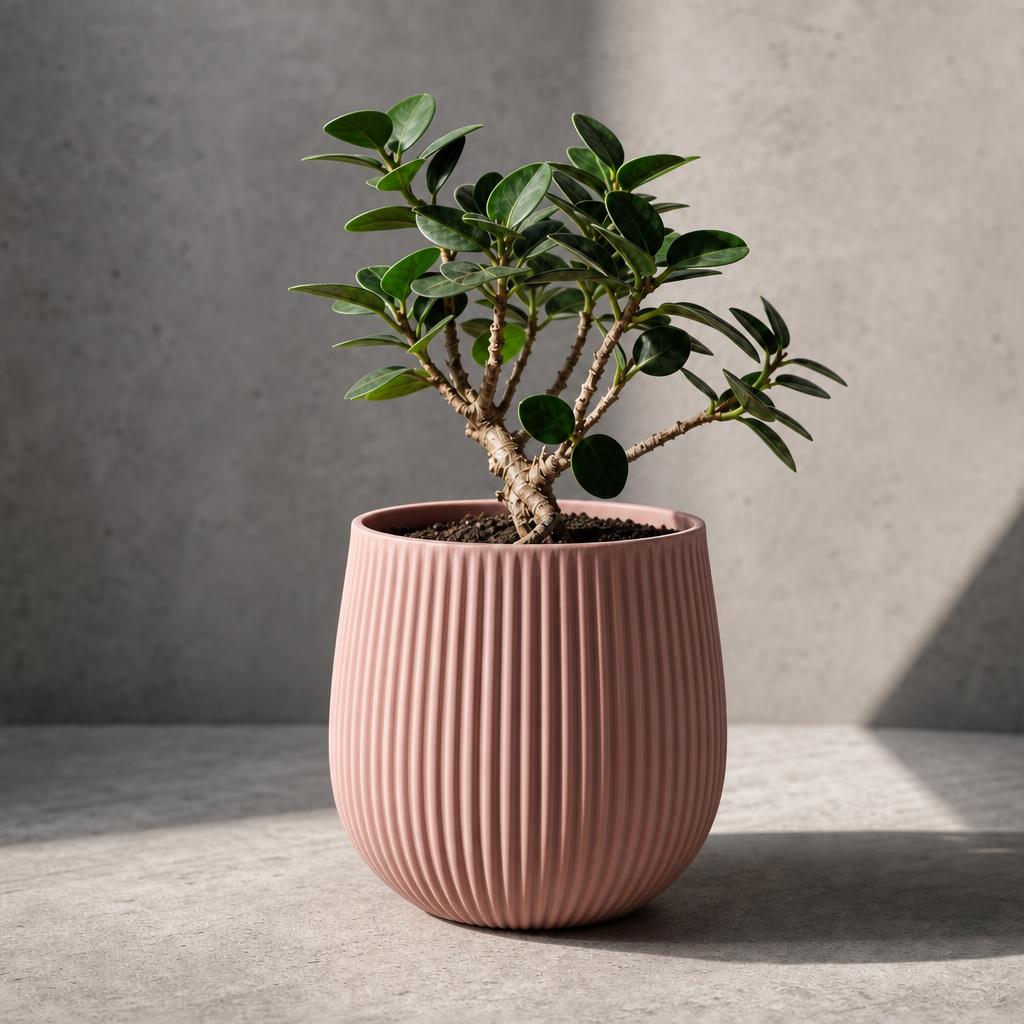
Modern Ribbed Plant Pot
+8Drainage holes
Questions
Good to know.
Can a pot be too big?
Yes. The extra soil holds water the roots can’t reach, it stays wet, and the roots rot. Going 2 to 4 cm wider is safest.
Can I keep my plant in its plastic nursery pot?
Yes. Choose a pot 2 to 4 cm wider so it slips in, and lift it out to water and drain. Planting it into fresh mix usually helps it grow better, though.
Does my pot need a drainage hole?
For almost every plant, yes. Without one, water pools at the bottom and the roots rot. Every pot in our guides has drainage built in.
How often should I repot?
Most houseplants every one to two years, in spring. Slow growers like ZZ, snake plants and succulents every two to three years.
What size are your pots?
Most come in Small (about 10 cm across), Medium (about 15 cm) and Large (about 20 cm). The exact width and height are on each product page.
Keep reading
More grow guides.
- Kitchen herbs
- Home office
- Office
- Pet-safe plants
- Balcony
- Bathroom
- Low light
- Gift ideas
- Which pot for your plant? (with the size guide)
Pet safety from the ASPCA plant list. Bunnings links open a search on bunnings.com.au; we’re not paid for them.
Size guide
Which size do you need?
Measure your nursery pot’s diameter and go one size up. A 2–4cm gap gives roots room without swamping them in extra soil.
Look for a pot 16–18 cm across.