Grow guide · Home office
Plants for the home office desk.
You spend most of the day at that desk, so make it a nicer place to be. These plants cope with less light, the glow of a screen and a busy week when you forget to water.
Updated

The short answer
- The easiest desk plants: devil’s ivy (pothos), ZZ plant, peperomia and snake plant. All cope with less light and a missed watering.
- Desk right by a sunny window? Hoya and succulents do well there.
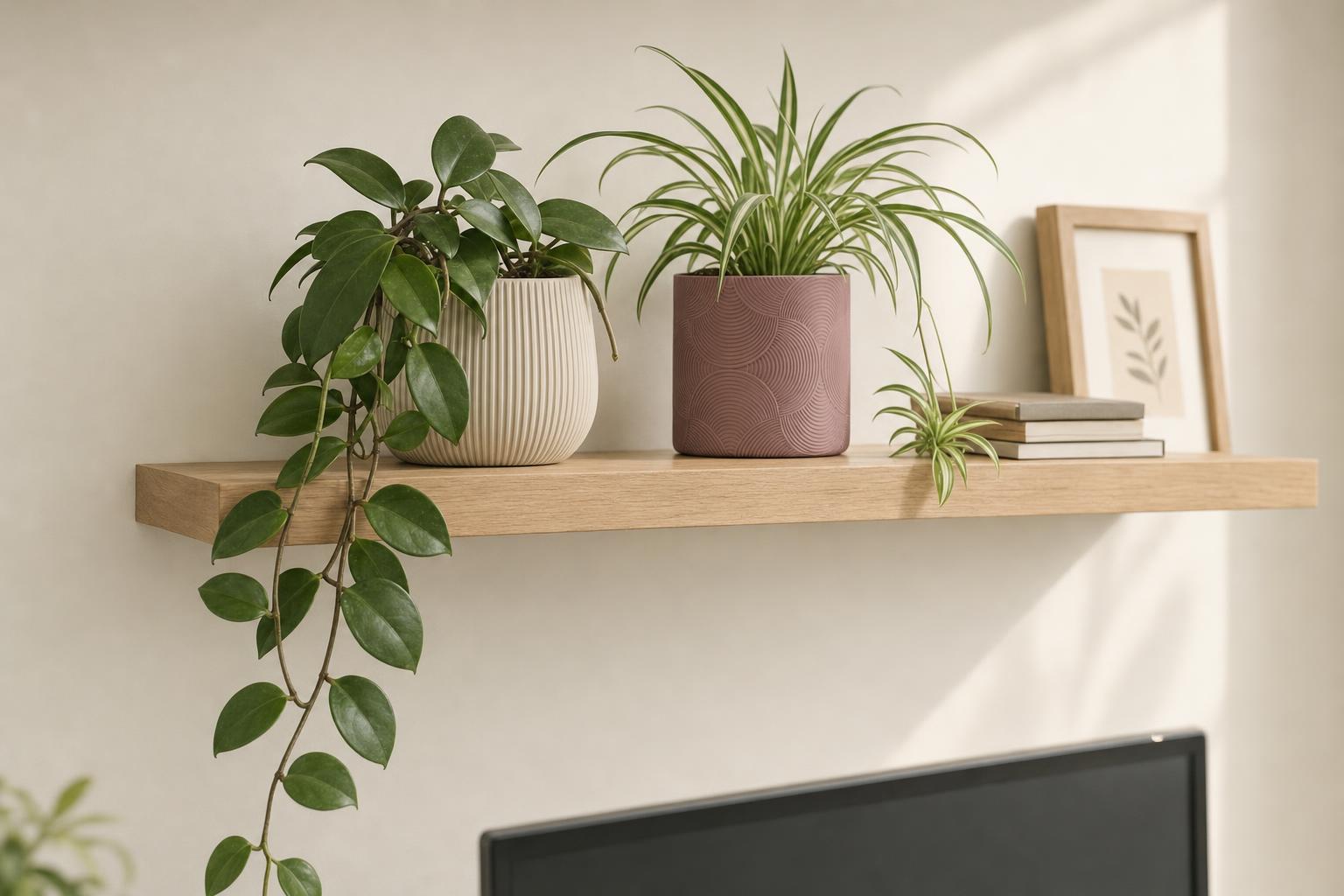
- Desks are small: a pot 10 to 15 cm across suits most desk plants. Trailing plants look great on a shelf above.
- Water when the top few centimetres are dry, usually every week or two. More desk plants die from too much water than too little.
Start with the light
How much light does your desk get?
Look at your desk around midday. If you can read comfortably without a lamp, most of these plants will be happy. The closer you are to a window, the more you can choose from.
Next to a sunny window
Hoya, succulents and spider plants. Pull succulents back from hot glass in summer.
Bright room, no direct sun
The sweet spot for devil’s ivy, peperomia and spider plants.
A dim corner
ZZ plant and snake plant cope here. They grow slowly, which on a desk is no bad thing.
No window at all
A small LED grow light on a timer makes the difference. ZZ and devil’s ivy cope best.
Keep plants out of the blast of a heater or air-conditioner vent, and away from a computer’s hot air vents. Dry, moving air browns leaf edges within weeks.
The plants
What to grow, and how.
At Bunnings, these are in the indoor plant section, mostly in 120 to 180 mm pots. Small 60 to 90 mm plants are cheap and soon fill one of our pots. Stock varies from store to store.
Devil’s ivy (pothos) Easy
Epipremnum aureum
- Part sun
- Not pet safe
- Sun
- Low to bright, indirect light. Keep it out of hot direct sun.
- Water
- When the top few centimetres of soil are dry: about every 1 to 2 weeks.
- Through the year
- Grows quickly in spring and summer, slows down in winter, so water less then.
- Good to know
- Let it trail from a shelf, or train stems along the back of the desk. Cuttings root in a glass of water.
- Pot
- Small (10 cm) or Medium (15 cm).
- Pets
- Toxic to cats and dogs.
Devil’s ivy (pothos) at Bunnings (opens Bunnings in a new tab)
ZZ plant Easy
Zamioculcas zamiifolia
- Low light
- Not pet safe
- Sun
- Low to bright, indirect light.
- Water
- Sparingly: every 2 to 4 weeks. Its thick roots store water.
- Through the year
- Slow and steady all year. Water even less in winter.
- Good to know
- About the hardest houseplant to kill, as long as it isn’t overwatered. The glossy leaves look good with almost no care.
- Pot
- Medium (15 cm) or Large (20 cm).
- Pets
- Not on the ASPCA list, but it’s a relative of devil’s ivy, so keep it away from pets to be safe.
Peperomia Easy
Peperomia (watermelon, baby rubber plant and others)
- Part sun
- Pet safe
- Sun
- Medium to bright, indirect light.
- Water
- Let the top half of the soil dry out. Its thick leaves hold water.
- Through the year
- Grows in spring and summer. Water less in winter.
- Good to know
- Compact and tidy, so it’s made for a desk. There are dozens of leaf patterns to choose from.
- Pot
- Small (10 cm).
Snake plant Easy
Dracaena trifasciata (sansevieria)
- Low light
- Not pet safe
- Sun
- Copes with a dim corner; grows faster in bright, indirect light.
- Water
- Let the soil dry right out. Every 2 to 3 weeks in summer, about monthly in winter.
- Through the year
- Slow growing. It only needs a bigger pot every few years.
- Good to know
- Upright and narrow, so it takes up very little desk space.
- Pot
- Medium (15 cm) or Large (20 cm).
- Pets
- Toxic to cats and dogs.
Hoya
Hoya carnosa and others
- Part sun
- Pet safe
- Sun
- Bright, indirect light, and a little morning sun.
- Water
- Let it dry out between drinks.
- Through the year
- Grows in spring and summer, and may flower in late spring if it gets enough light.
- Good to know
- Flowers best a little snug in its pot. Don’t cut off old flower stalks: it flowers from them again.
- Pot
- Small (10 cm) or Medium (15 cm).
Spider plant Easy
Chlorophytum comosum
- Part sun
- Pet safe
- Sun
- Bright, indirect light.
- Water
- Keep it lightly moist in summer, a little drier in winter.
- Through the year
- Grows quickly in the warm months and sends out baby plants.
- Good to know
- Brown leaf tips usually mean dry air or salts from tap water: snip them off and try rainwater.
- Pot
- Medium (15 cm).
- Pets
- Safe for cats and dogs, though cats love to chew it.
Succulents
Echeveria, haworthia and others
- Full sun
- Pet safe
- Sun
- Lots of light: right next to a sunny window.
- Water
- Water well, then let the soil dry right out. Every 2 to 3 weeks in summer, much less in winter.
- Through the year
- Most grow in spring and autumn and rest in the heat of summer.
- Good to know
- Without enough light they stretch and go pale. Plant them in cactus and succulent mix.
- Pot
- Small (10 cm).
- Pets
- Echeveria and haworthia are safe. Jade and aloe are not.
Your shopping list
What you’ll need.
Your plants
Start with one or two easy ones, like devil’s ivy and a peperomia. You can always add more once they’re thriving.
Indoor potting mix
A mix made for indoor plants drains well. Garden soil packs down hard in a pot and brings in bugs.
Indoor plant food
Every 2 to 4 weeks in spring and summer, at half strength. None in winter.
A soil meter (optional)
Never sure when to water? Push it into the soil and it tells you if it’s still wet down where the roots are.
A saucer, if your pot has none
Pots marked Drip tray below don’t need one. Pots marked Drainage holes drain through the base, so stand them on a saucer.
A pot with drainage
Roots rot in a pot that holds water. Every pot below lets water out.
Through the year
Care through the year.
Indoor plants still follow the seasons: they grow in the warm months and rest in winter.
| Task | SpringSep–Nov | SummerDec–Feb | AutumnMar–May | WinterJun–Aug |
|---|---|---|---|---|
| Water | More often as it warms up | Most often: check every week | Less often | Least: most plants every few weeks |
| Feed | Start again | Every 2 to 4 weeks | Stop by late autumn | None |
| Repot | The best time | Fine | If you must | Leave it |
| Light | Move closer to the window | Pull back from hot glass | Move closer again | Your brightest spot |
When things go wrong
Common problems.
The leaves are yellow and the soil is wet.
Too much water. Let the soil dry out before watering again, and tip out the drip tray after watering so the pot doesn’t stand in water.
Long, bare stems are reaching for the window.
Not enough light. Move it closer to a window, and trim the long stems: it grows back bushier.
The leaf tips are brown and crispy.
Dry air from air-con or a heater. Move it away from the vent. Grouping a few plants together helps them keep each other humid.
It’s dropping leaves since I moved it.
Plants sulk after a move to new light. Give it a few weeks before changing anything else.
There are tiny flies around the soil.
Fungus gnats. They breed in soil that stays wet. Let the top of the soil dry out between drinks and they die off.
The leaves are dusty.
Wipe them with a damp cloth every month or so. Dust blocks the light the plant feeds on.
Pots that suit
Our pots for your desk.
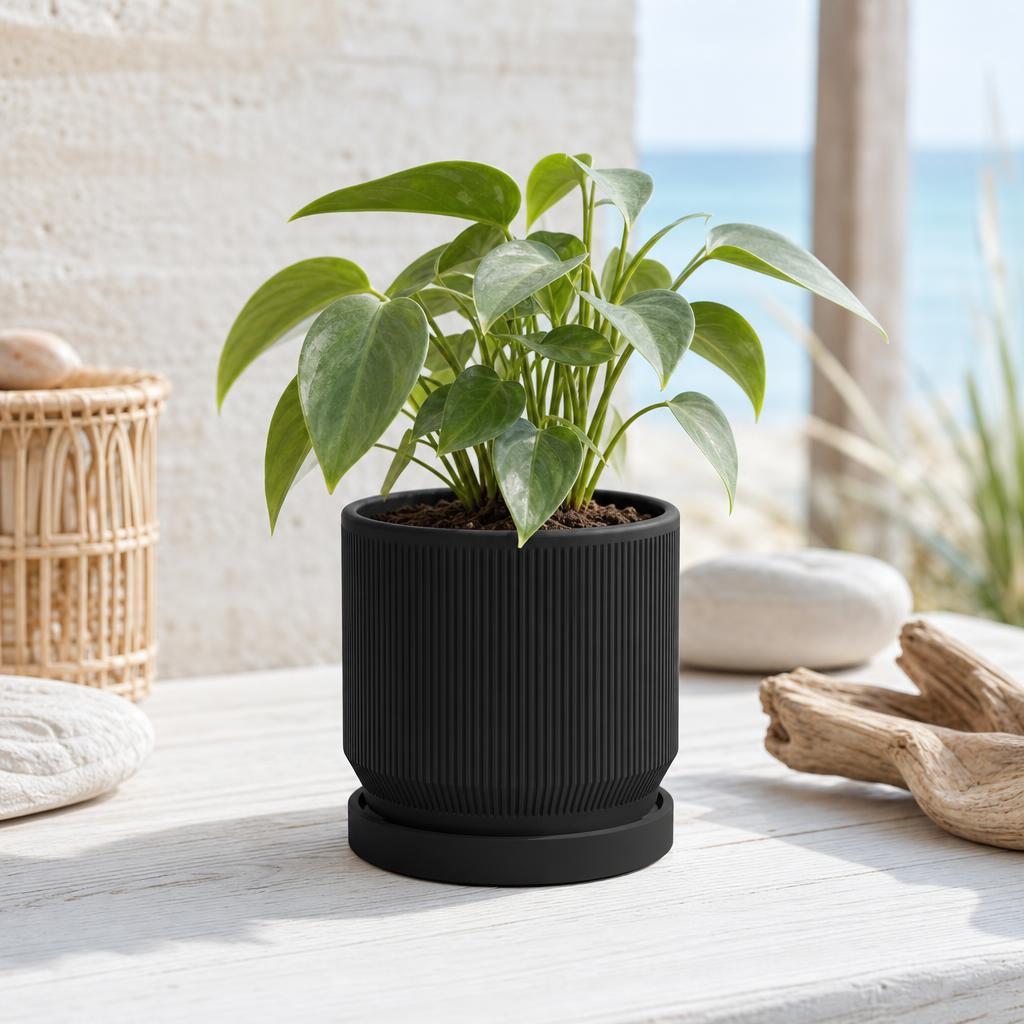
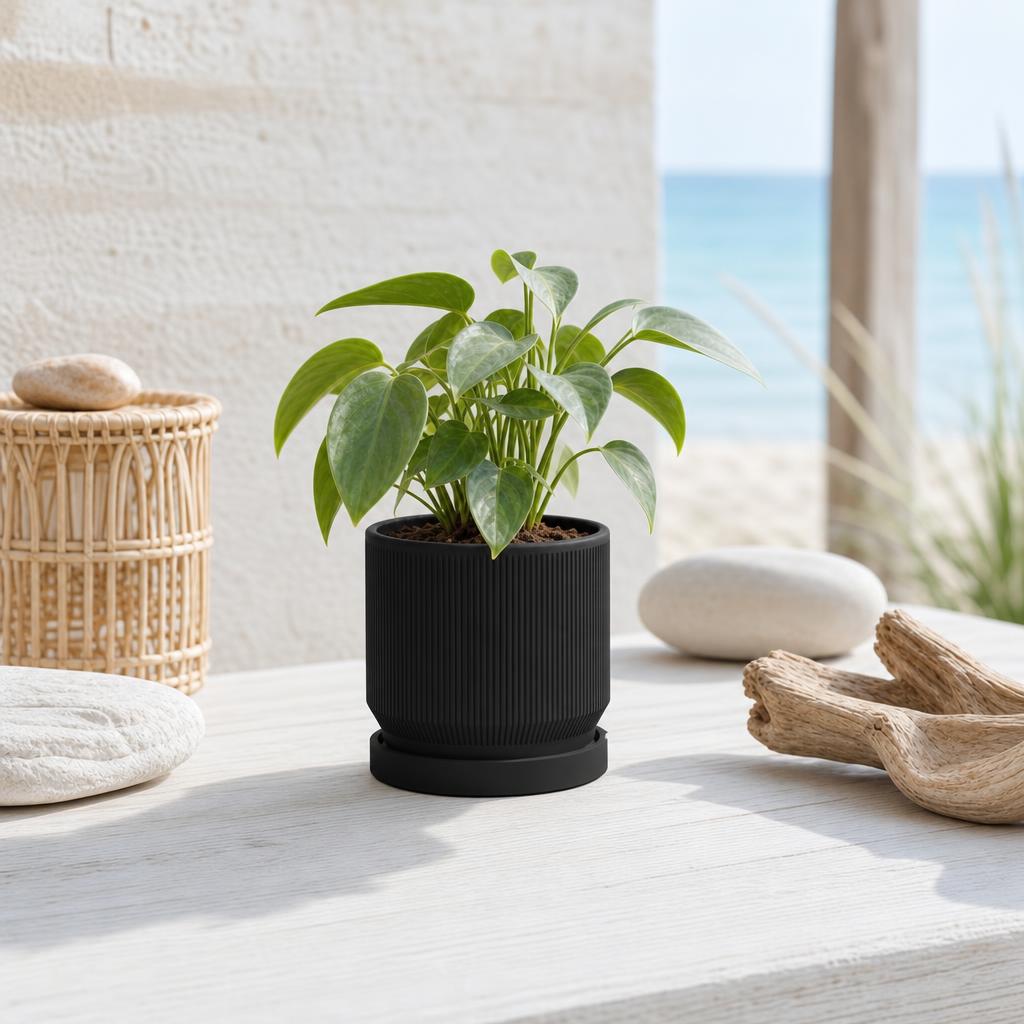
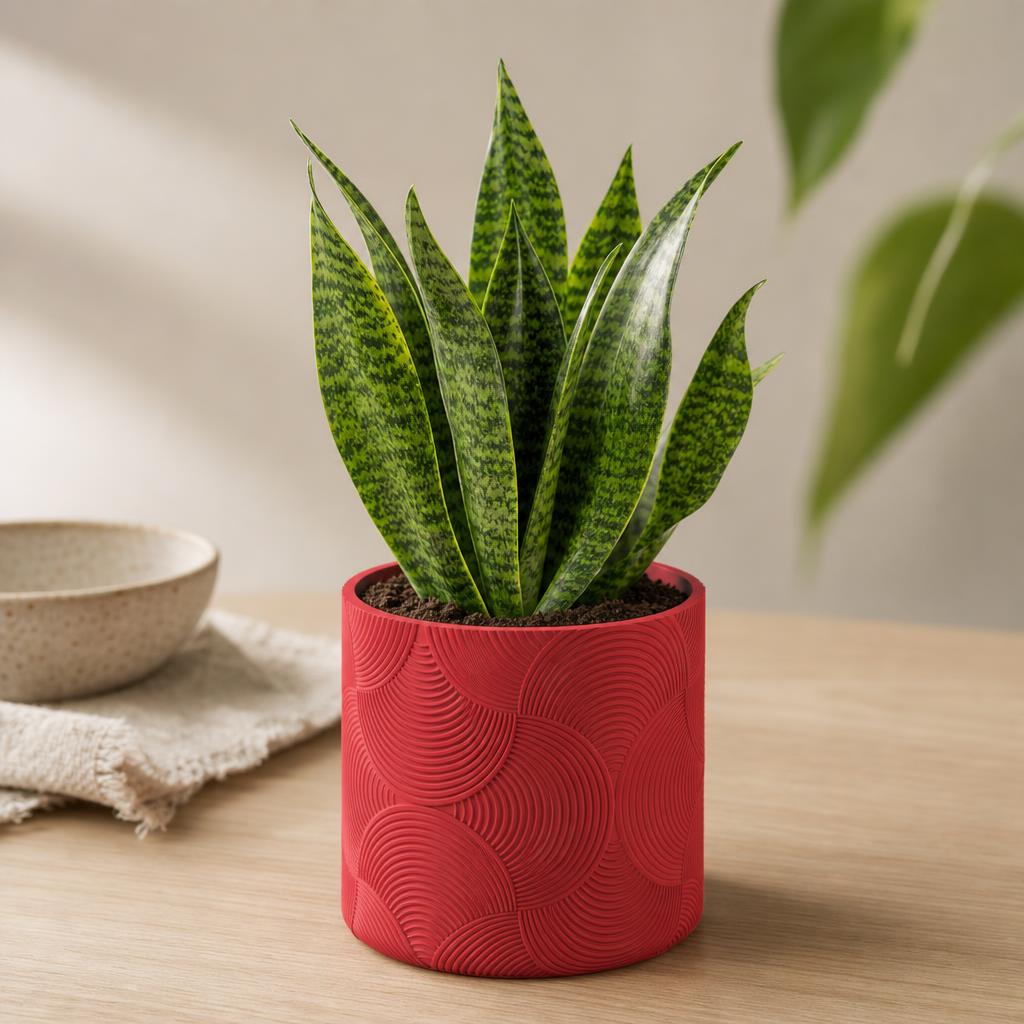
Every pot here drains. Small (10 cm) and Medium (15 cm) suit most desks; Large (20 cm) suits a ZZ or snake plant on a side table.
-
Indoors & outdoors
Mid Century Modern Ribbed Planter with Tray
+5Drip tray
-
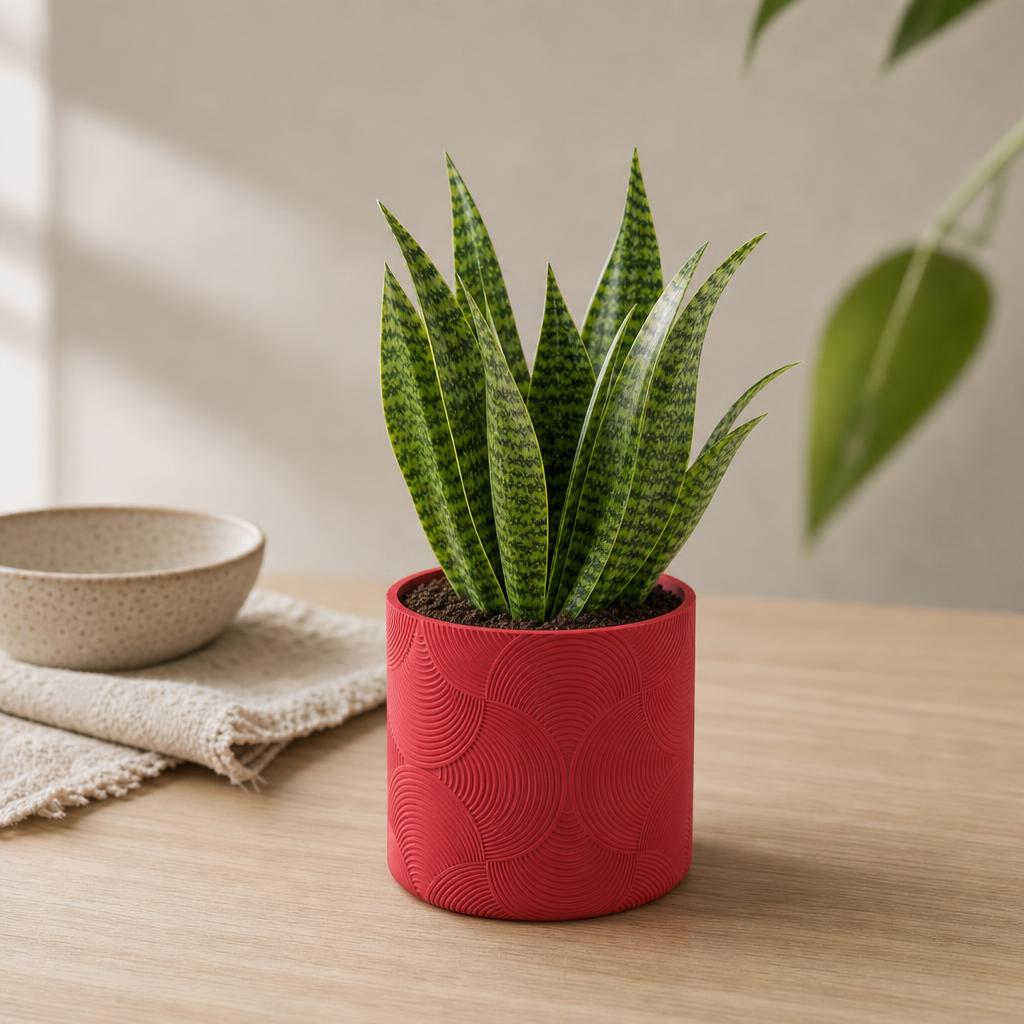
Indoors & outdoors
Boho Desktop Plant Pot with Hidden Drip Tray
+8Drip tray
-
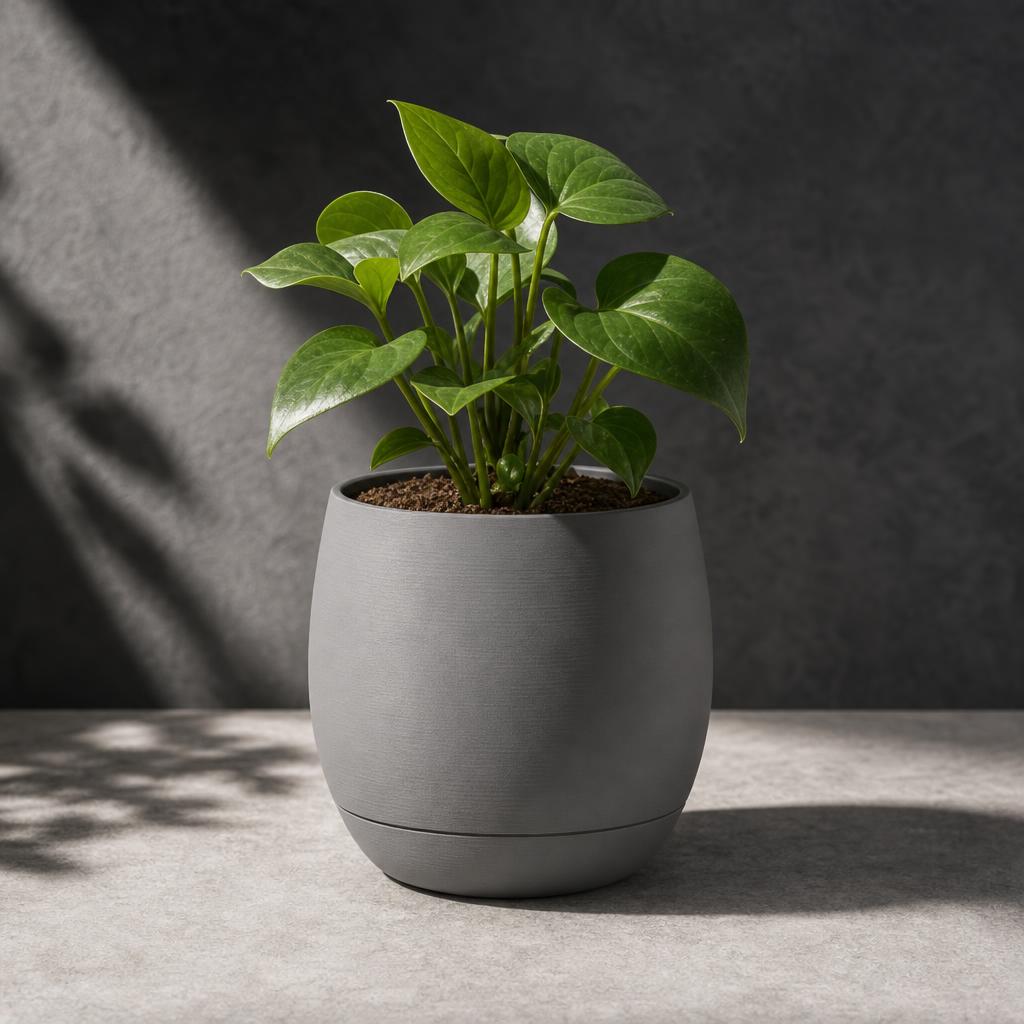
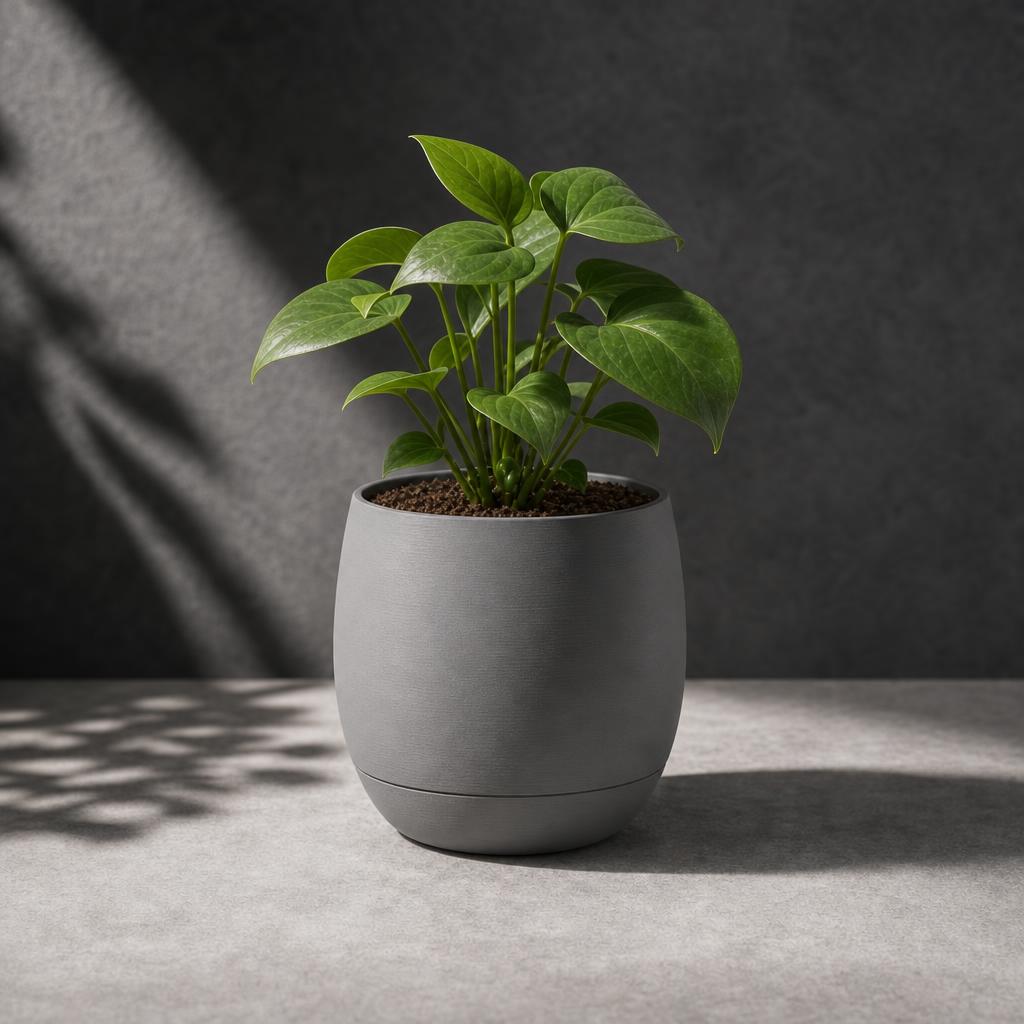
Indoors & outdoors
Aurex Indoor Plant Pot with Drip tray
+7Drip tray
-
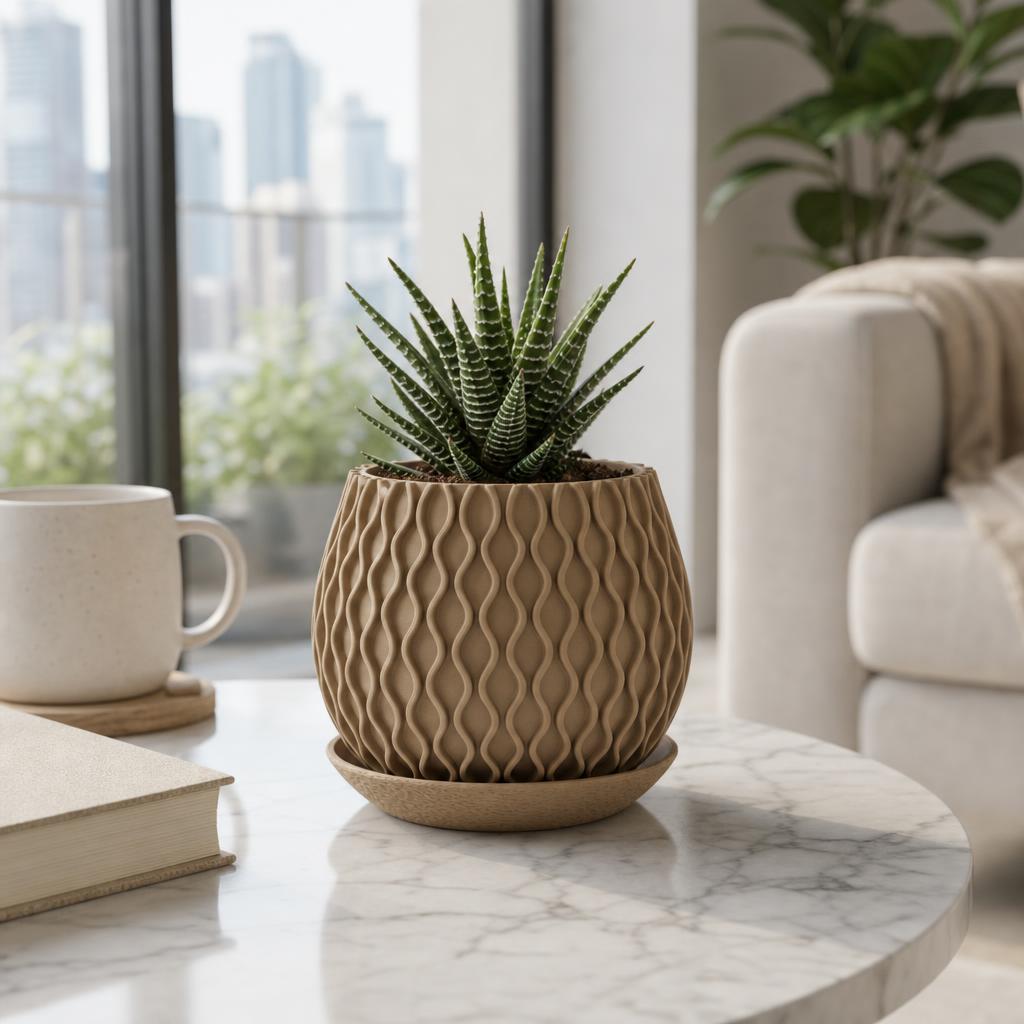
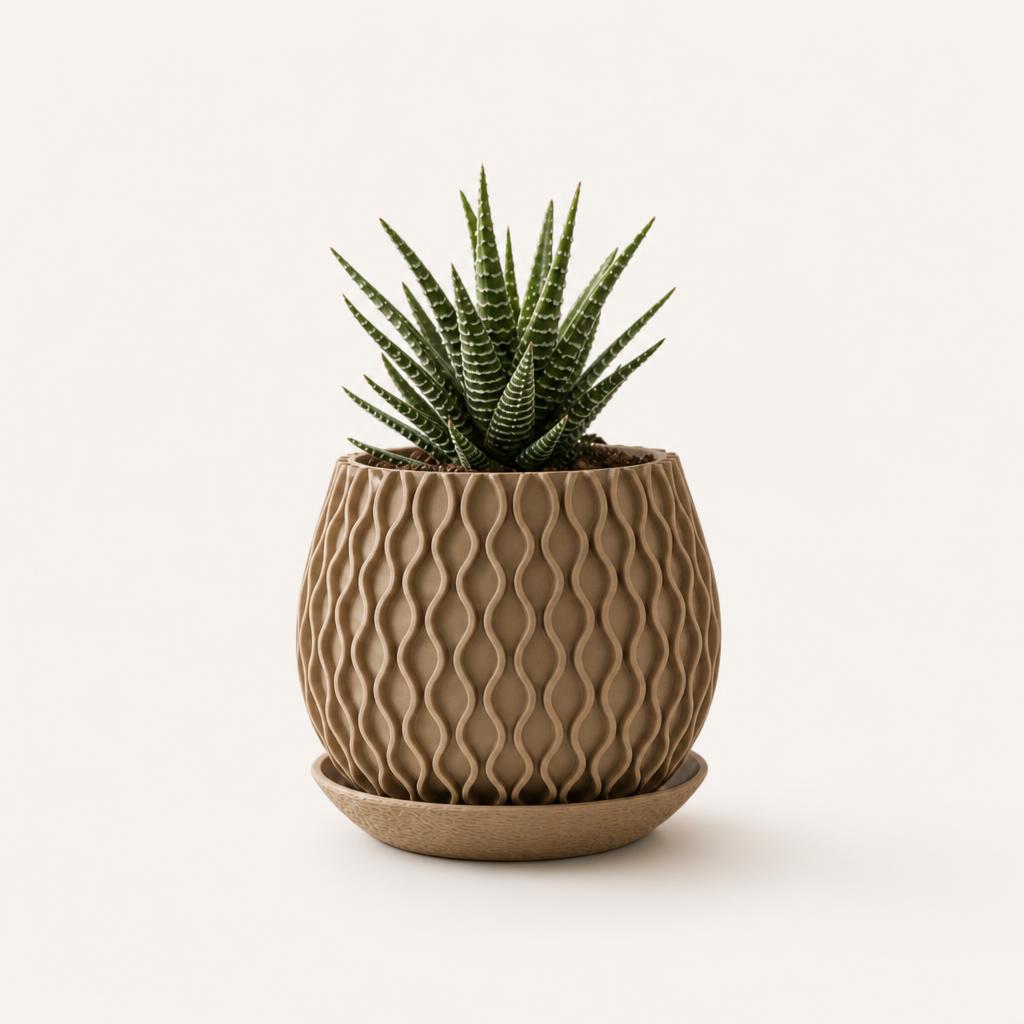
Indoors & outdoors
Hertz Decorative Wave Plant Pot with Drip Base
+8Drip tray
-
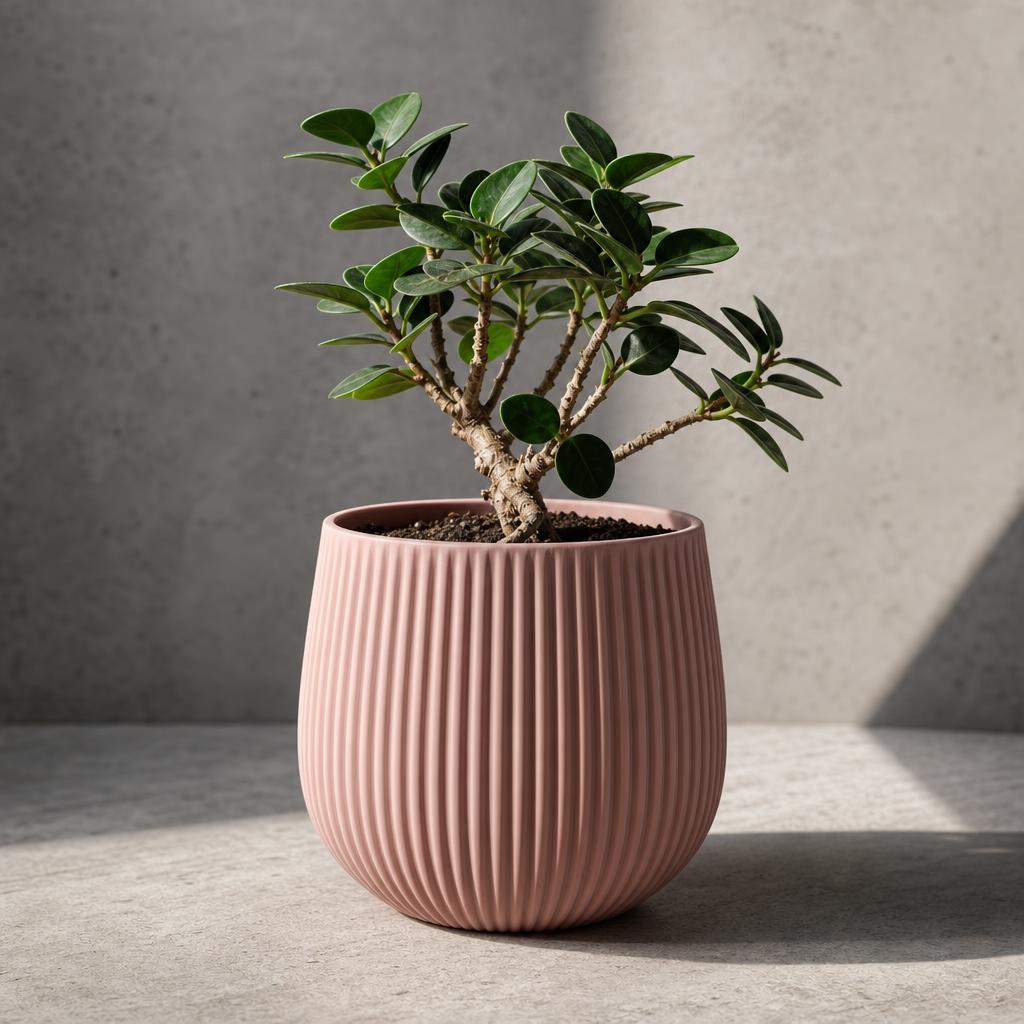
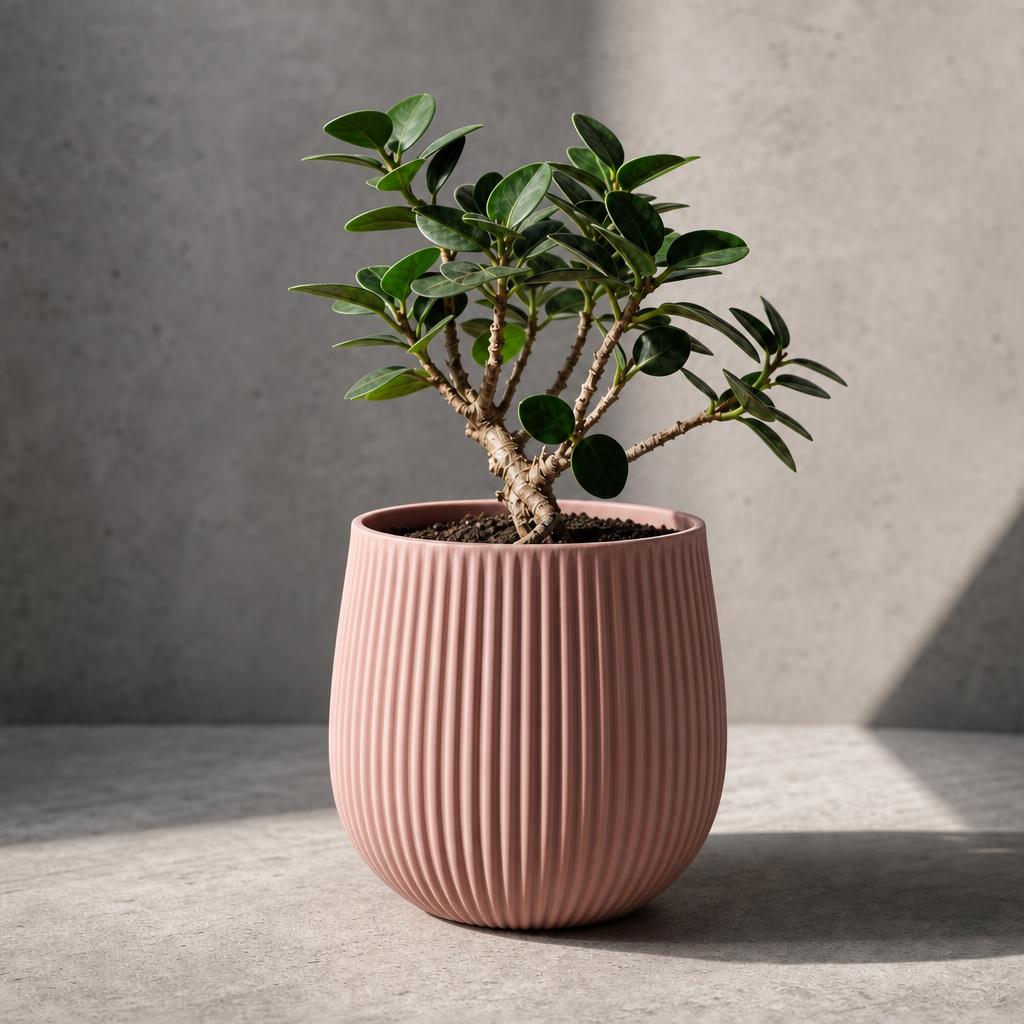
Indoors & outdoors
Modern Ribbed Plant Pot
+8Drainage holes
Questions
Good to know.
What’s the best plant for a desk with no window?
ZZ plant and devil’s ivy cope best with very little light. Even so, they need some: a small LED grow light on a timer, or a desk lamp left on during the day, keeps them going.
Do desk plants really clean the air?
Not by much. The famous NASA study tested plants in small sealed chambers; in a real room you’d need a huge number of plants to match what an open window or good ventilation does. Plants do make a space nicer to work in, which is reason enough.
How often should I water desk plants?
Most every week or two, when the top few centimetres of soil are dry. ZZ and snake plants every two to four weeks. Water less in winter.
Will my plants survive while I’m away for a week or two?
The tough ones will. Water well the day before you go, move them back from hot windows, and ZZ, snake plants and succulents will be fine for two to three weeks.
Which desk plants are safe for cats and dogs?
Peperomia, hoya, spider plant and echeveria are listed as non-toxic to cats and dogs by the ASPCA. Devil’s ivy and snake plant are toxic, and we’d keep a ZZ plant away from pets too. See our pet-safe plants guide.
What size pot do desk plants need?
Choose a pot 2 to 4 cm wider than the nursery pot. A plant bought in a 120 mm pot suits Medium (15 cm); one in a 140 to 170 mm pot suits Large (20 cm). Small plants and succulents suit Small (10 cm).
Keep reading
More grow guides.
- Kitchen herbs
- Office
- Pet-safe plants
- Balcony
- Bathroom
- Low light
- Gift ideas
- Pot sizes
- Which pot for your plant? (with the size guide)
Pet safety from the ASPCA plant list. Bunnings links open a search on bunnings.com.au; we’re not paid for them.