Grow guide · Low light
Plants for low light and dim rooms.
A south-facing bedroom, a hallway, an apartment that never gets the sun. You can still have plants. Pick the right ones, and learn the one thing that matters most in low light: watering less.
Updated

The short answer
- Plants that cope with low light: ZZ plant, snake plant, devil’s ivy, heartleaf philodendron, parlour palm and peace lily.
- “Low light” still means some light. No plant grows in the dark: if there’s no shadow at all, add a grow light.
- In Australia, south-facing rooms are the dimmest. Even moving a plant a metre closer to a window helps a lot.
- In low light plants drink slowly, so water less. Overwatering is the number one killer.
Start with the light
Try the shadow test.
Around midday, hold your hand about 30 cm above the spot where the plant will go, and look at its shadow.
A sharp shadow
Bright light, maybe direct sun. Most houseplants are happy; the plants on this page will grow faster.
A soft, fuzzy shadow
Medium light. Fine for nearly everything on this page.
A faint shadow
Low light. ZZ plant, snake plant and devil’s ivy are your best bets.
No shadow at all
Too dark for any plant to last. Add a small LED grow light on a timer, or choose another spot.
Light falls off quickly as you move away from a window: a plant two metres back gets far less than one right beside it. If a plant is struggling, moving it even a metre closer is the first thing to try.
The plants
What to grow, and how.
At Bunnings, these are in the indoor plant section, mostly in 120 to 180 mm pots. A plant from a 120 mm pot suits our Medium (15 cm); one from a 140 to 170 mm pot suits Large (20 cm).
ZZ plant Easy
Zamioculcas zamiifolia
- Low light
- Not pet safe
- Sun
- Low light is fine. It just grows more slowly.
- Water
- In low light, only every 3 to 4 weeks. Its potato-like roots store water.
- Through the year
- Puts out a new stem or two in the warm months; does almost nothing in winter.
- Good to know
- The champion of dim rooms. If the stems lean and stretch, it’s asking for a little more light.
- Pot
- Medium (15 cm) or Large (20 cm).
- Pets
- Not on the ASPCA list, but it’s a relative of devil’s ivy, so keep it away from pets to be safe.
Snake plant Easy
Dracaena trifasciata (sansevieria)
- Low light
- Not pet safe
- Sun
- Low light is fine; brighter light makes the leaf bands stronger.
- Water
- Let the soil dry right out. In a dim room, about once a month, less in winter.
- Through the year
- Slow all year, slower still in a dim room. That’s normal.
- Good to know
- A good bedroom plant: tidy, upright and happy to be ignored.
- Pot
- Medium (15 cm) or Large (20 cm).
- Pets
- Toxic to cats and dogs.
Devil’s ivy (pothos) Easy
Epipremnum aureum
- Low light
- Not pet safe
- Sun
- Copes with low light, though the yellow marbling fades to plain green.
- Water
- When the top few centimetres are dry: every 2 to 3 weeks in a dim room.
- Through the year
- Grows in spring and summer, even in low light, just more slowly.
- Good to know
- Choose a plain green or darker variety for a dim spot. The pale, highly marbled ones need more light.
- Pot
- Small (10 cm) or Medium (15 cm).
- Pets
- Toxic to cats and dogs.
Devil’s ivy (pothos) at Bunnings (opens Bunnings in a new tab)
Heartleaf philodendron Easy
Philodendron hederaceum
- Low light
- Not pet safe
- Sun
- Low to medium, indirect light.
- Water
- When the top of the soil is dry.
- Through the year
- Grows through the warm months.
- Good to know
- Soft, heart-shaped leaves that trail from a bookshelf. If gaps grow between the leaves, it wants more light.
- Pot
- Small (10 cm) or Medium (15 cm).
- Pets
- Toxic to cats and dogs.
Heartleaf philodendron at Bunnings (opens Bunnings in a new tab)
Parlour palm Easy
Chamaedorea elegans
- Low light
- Pet safe
- Sun
- Low to medium, indirect light. Direct sun yellows the fronds.
- Water
- Keep it lightly moist, a little drier in winter.
- Through the year
- Slow growing, so it stays a manageable size for years.
- Good to know
- Named for the dim Victorian parlours it was popular in. The one pet-safe plant on this page.
- Pot
- Medium (15 cm) or Large (20 cm).
Peace lily Easy
Spathiphyllum
- Low light
- Not pet safe
- Sun
- Copes with low light, but needs medium light to flower.
- Water
- Keep it lightly moist. It droops when thirsty, which makes it easy to read.
- Through the year
- Flowers mostly in spring and summer, if it gets enough light.
- Good to know
- In a dim room expect lush leaves rather than flowers. Move it brighter in spring if you want the white flowers.
- Pot
- Medium (15 cm) or Large (20 cm).
- Pets
- Toxic to cats and dogs.
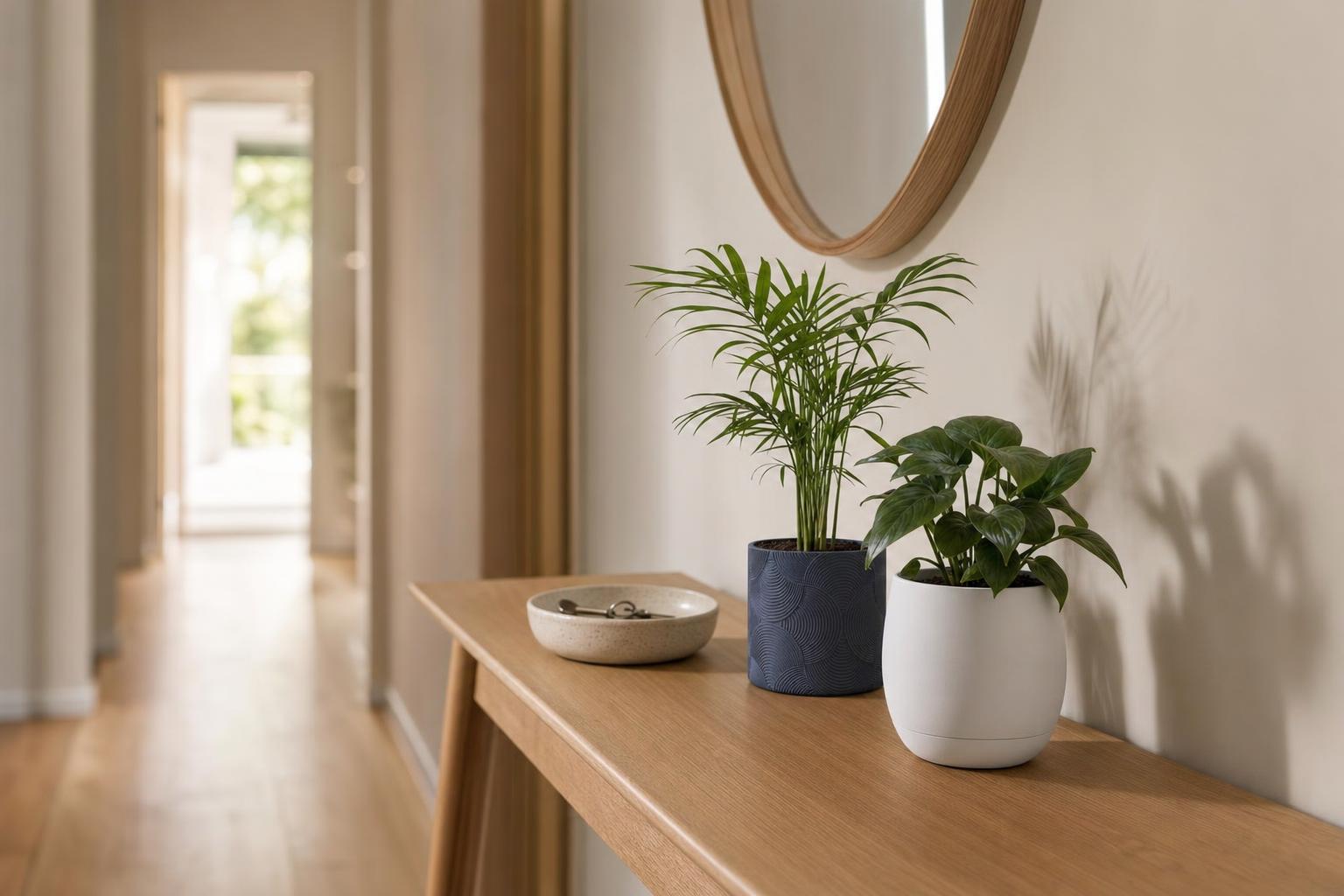
Your shopping list
What you’ll need.
Your plants
Start with a ZZ plant or a snake plant: they’re the hardest to get wrong in low light.
Indoor potting mix
A free-draining mix matters even more in low light, where soil stays wet for longer.
A grow light (if it’s really dark)
A small LED grow light on a timer for 8 to 12 hours a day keeps a plant going in a room with no shadow at all.
A soil meter
In low light it’s hard to tell when to water. A meter tells you if it’s still wet where the roots are.
A pot with drainage
In low light, soil dries slowly: a pot that holds water rots the roots. Every pot below lets water out.
Through the year
Care through the year.
In low light, plants use water slowly, and in winter hardly at all. Water by the soil, not by the calendar.
| Task | SpringSep–Nov | SummerDec–Feb | AutumnMar–May | WinterJun–Aug |
|---|---|---|---|---|
| Water | More often as it warms up | Most often: check every week | Less often | Least: most plants every few weeks |
| Feed | Start again | Every 2 to 4 weeks | Stop by late autumn | None |
| Repot | The best time | Fine | If you must | Leave it |
| Light | Move closer to the window | Pull back from hot glass | Move closer again | Your brightest spot |
When things go wrong
Common problems.
The soil is still wet a week after watering.
Normal in low light, and a warning sign: water much less often, and make sure the pot isn’t standing in water. A smaller pot dries out faster.
It’s stretching, with long gaps between the leaves.
It wants more light. Move it closer to a window, and trim the long stems so it grows back bushier.
The marbled leaves have turned plain green.
Variegated plants lose their pattern in low light. More light brings it back in new leaves.
The leaves are yellowing from the bottom.
Usually overwatering. Let the soil dry out more between drinks.
Nothing has grown all winter.
Normal. Plants rest in winter, especially in low light. Water sparingly until spring.
Pots that suit
Our pots for darker spots.
Every pot here drains, which matters most in low light. Choose a pot only 2 to 4 cm wider than the nursery pot: too much soil stays wet.
-
Indoors & outdoors
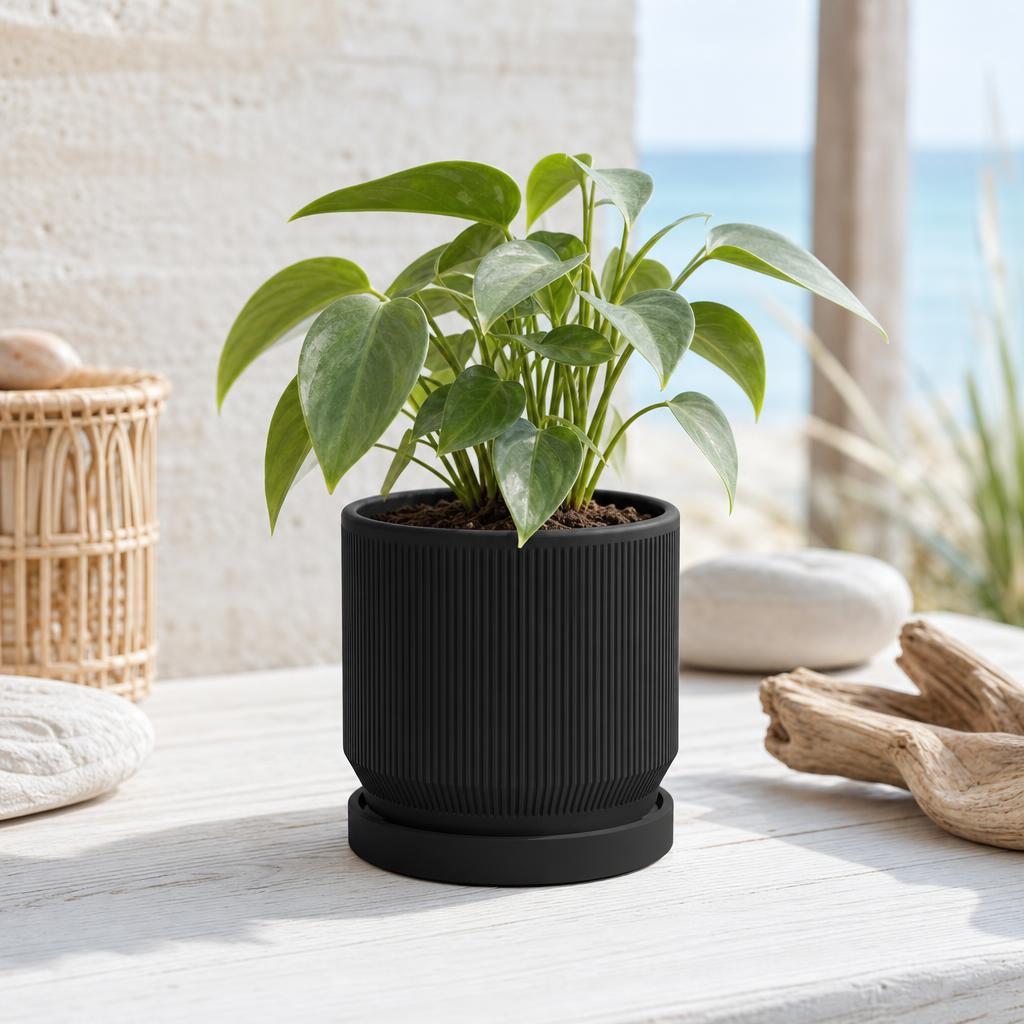
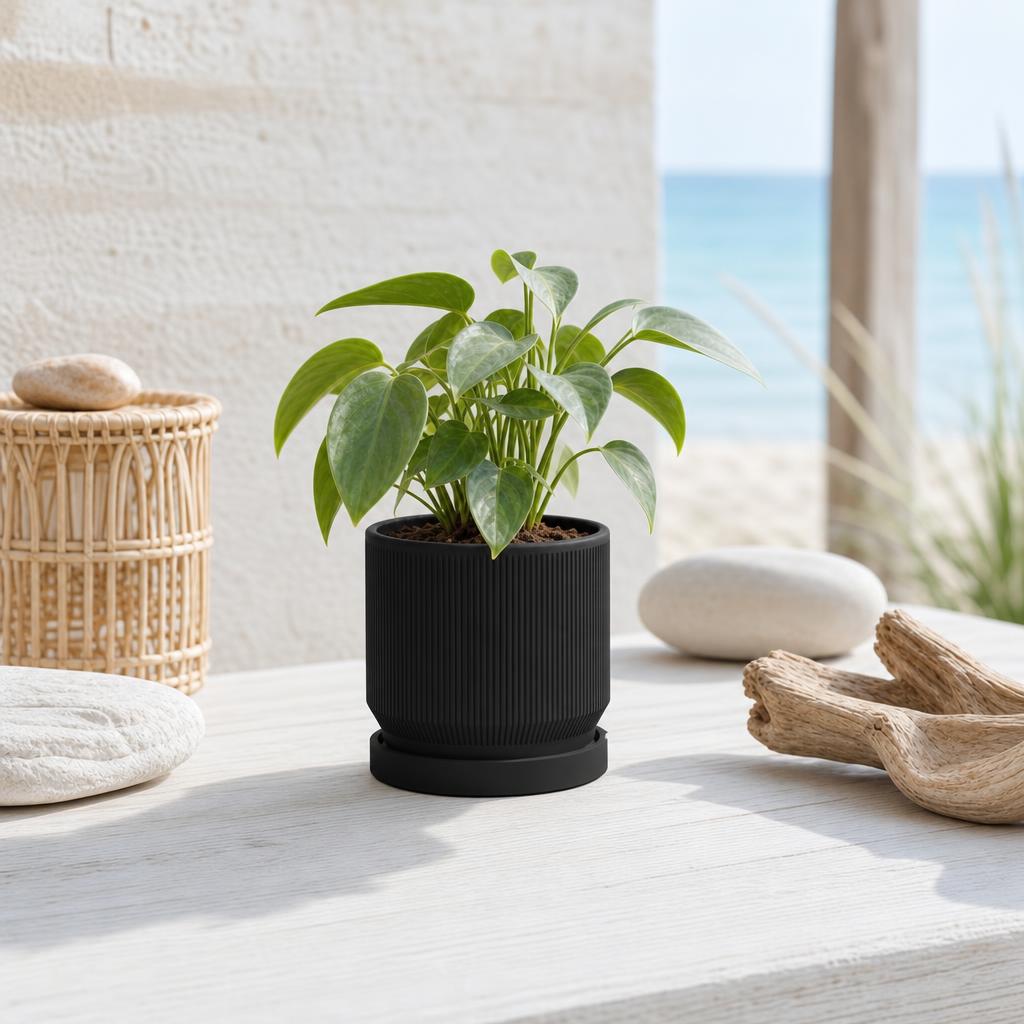
Mid Century Modern Ribbed Planter with Tray
+5Drip tray
-
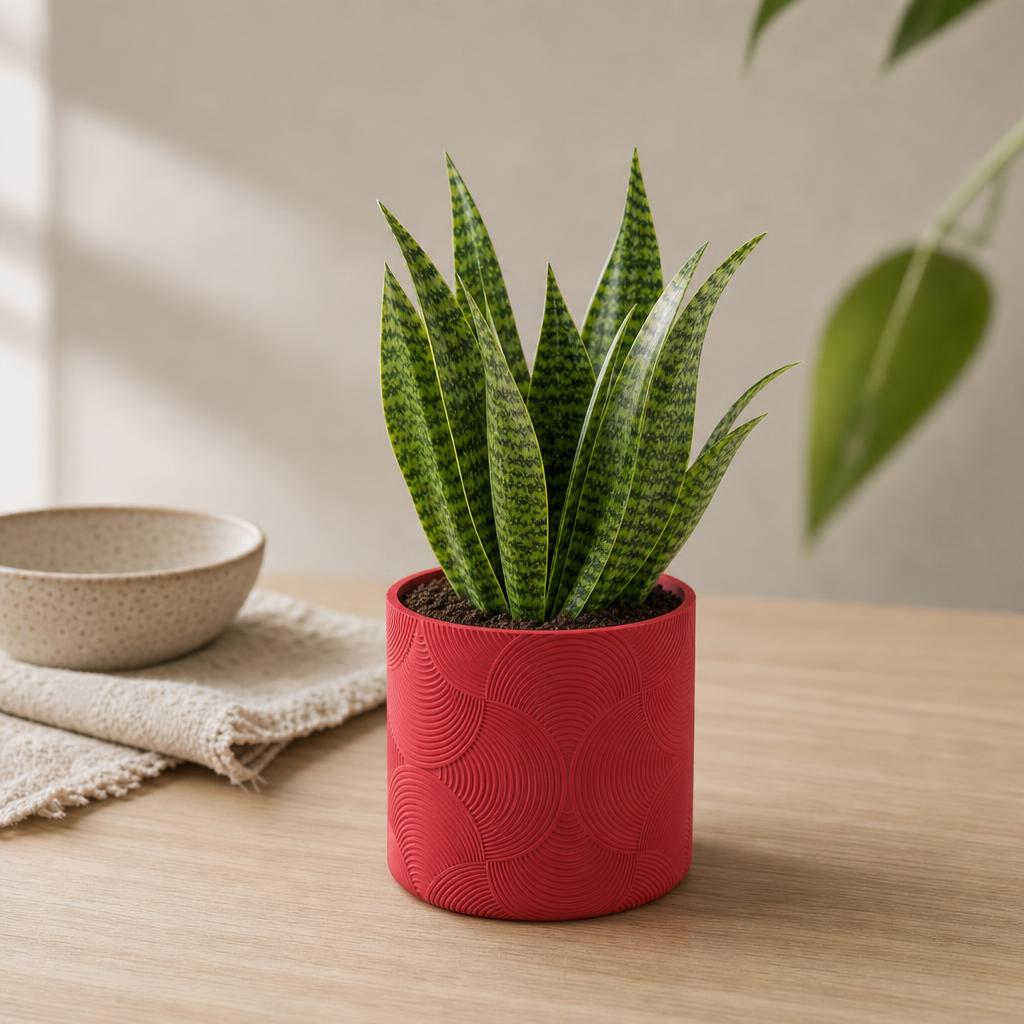
Indoors & outdoors
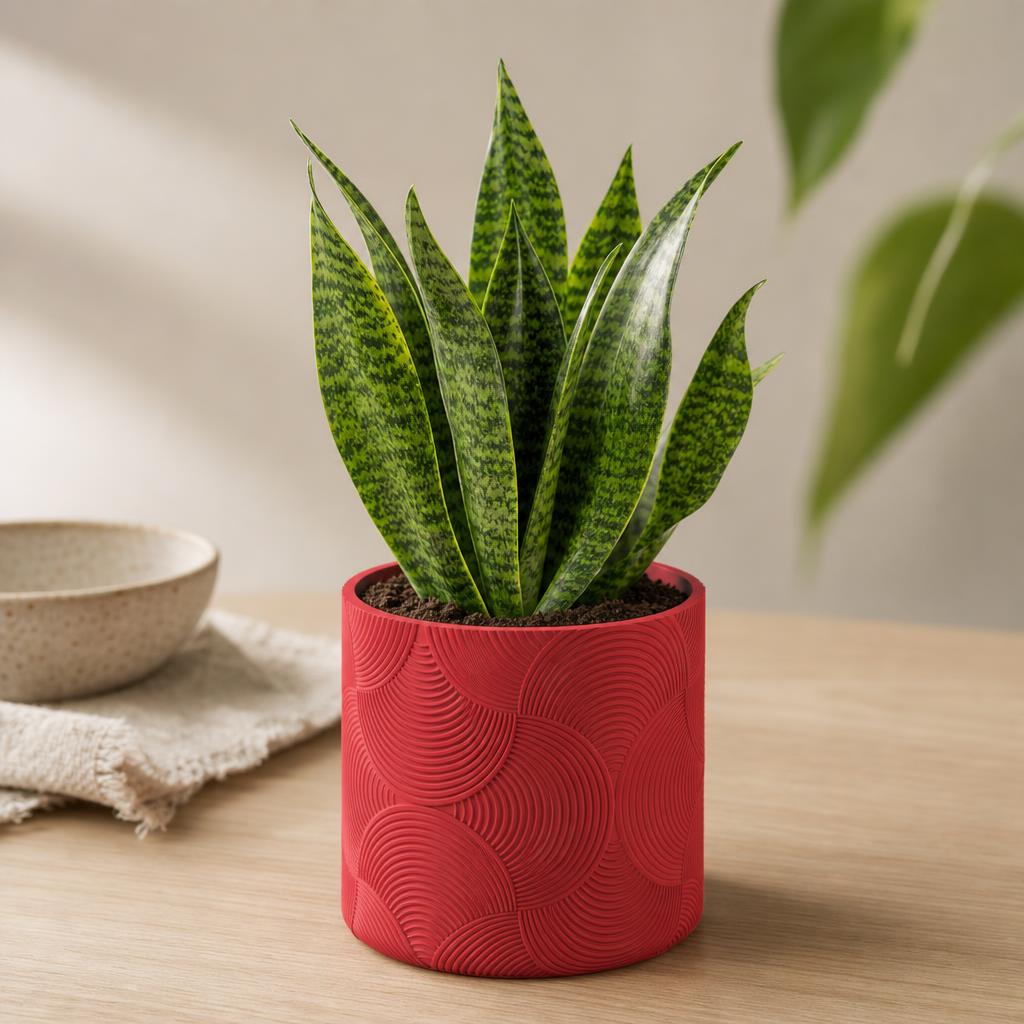
Boho Desktop Plant Pot with Hidden Drip Tray
+8Drip tray
-
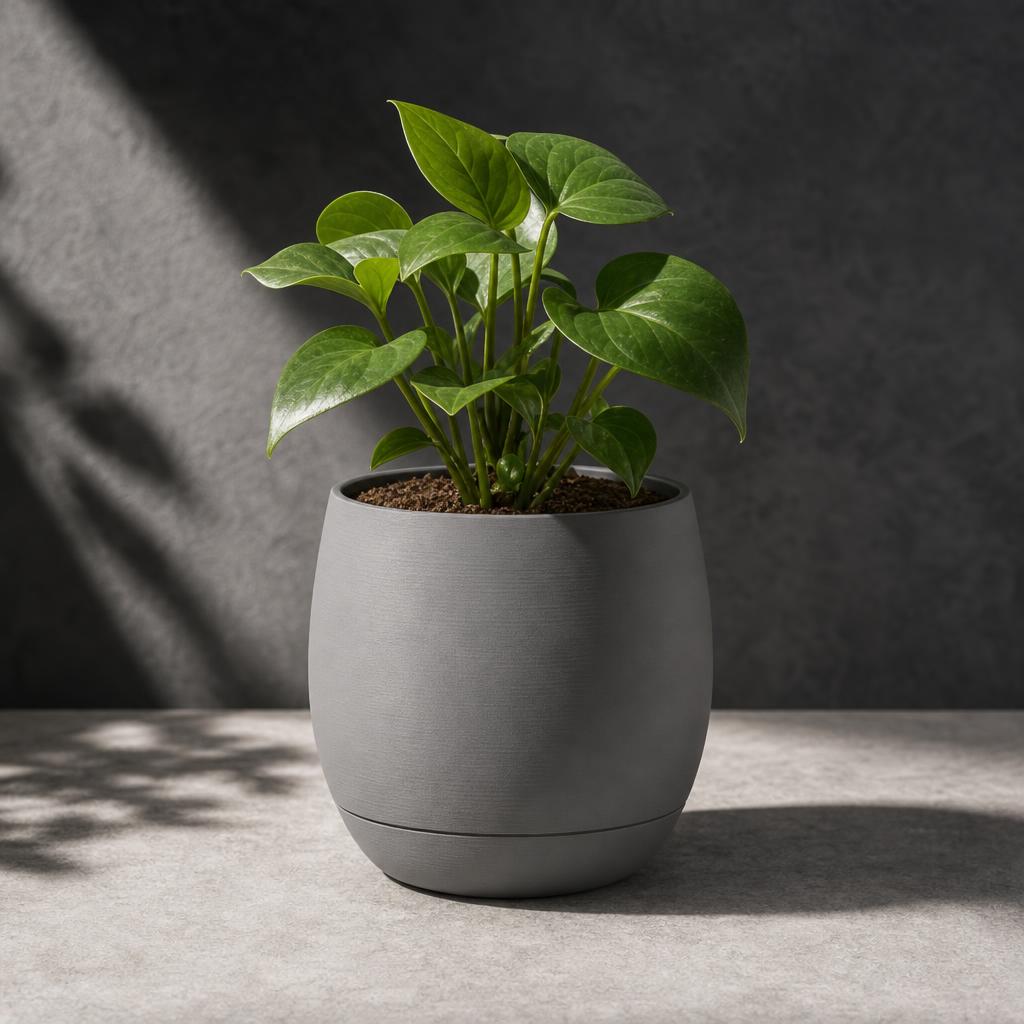
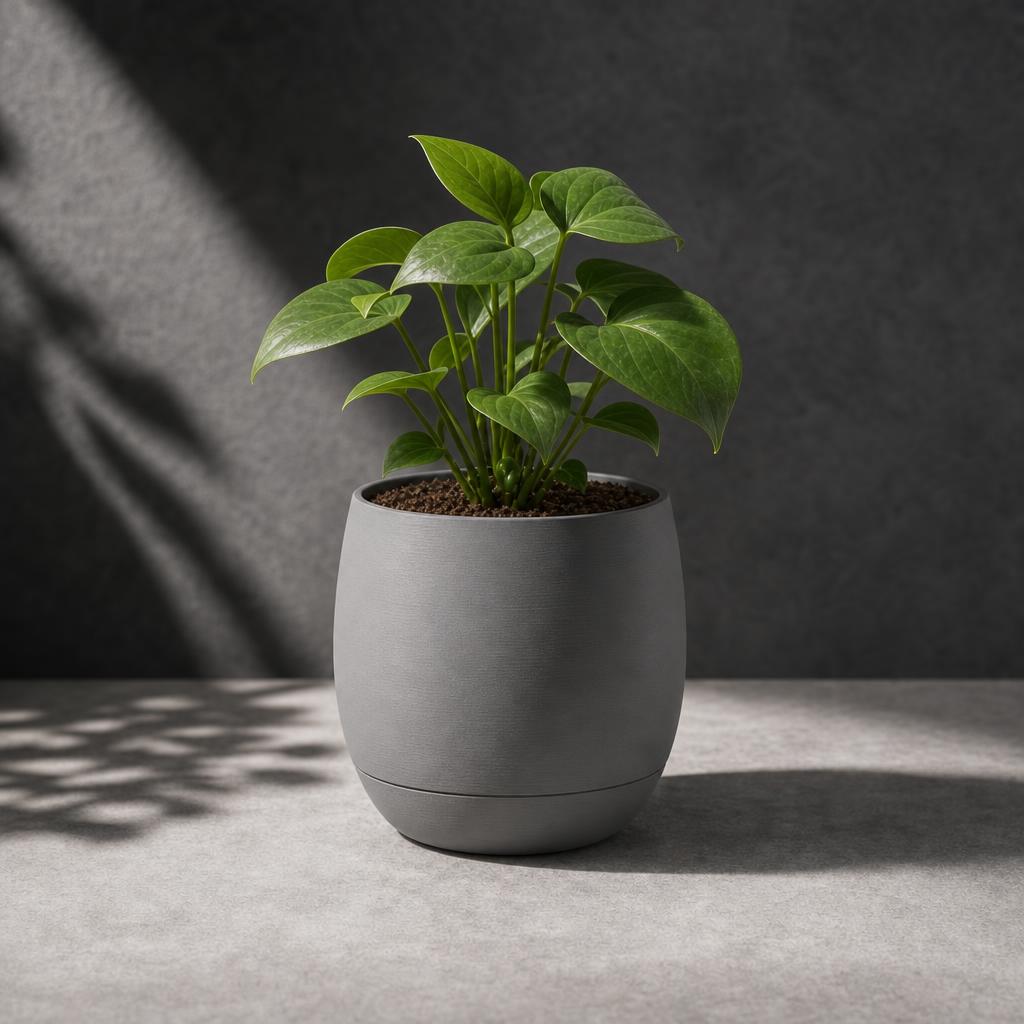
Indoors & outdoors
Aurex Indoor Plant Pot with Drip tray
+7Drip tray
-
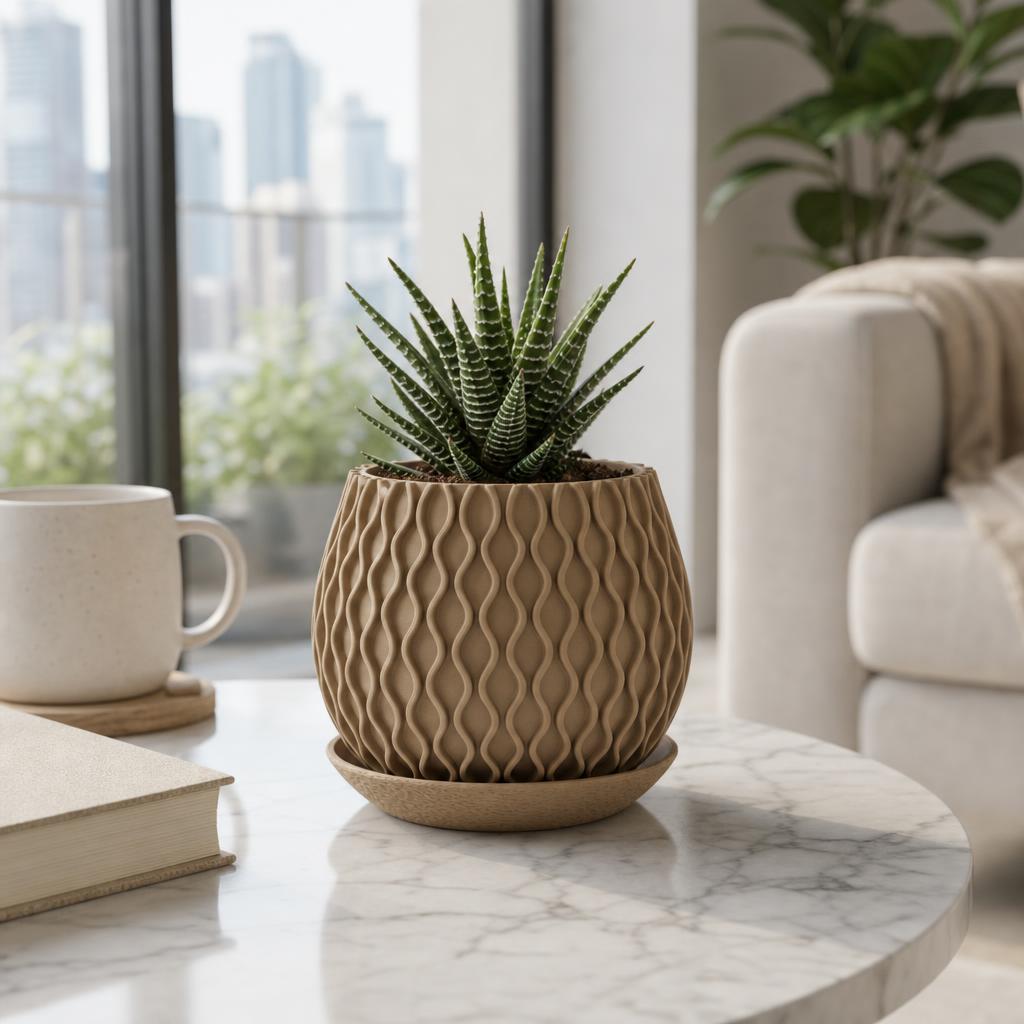
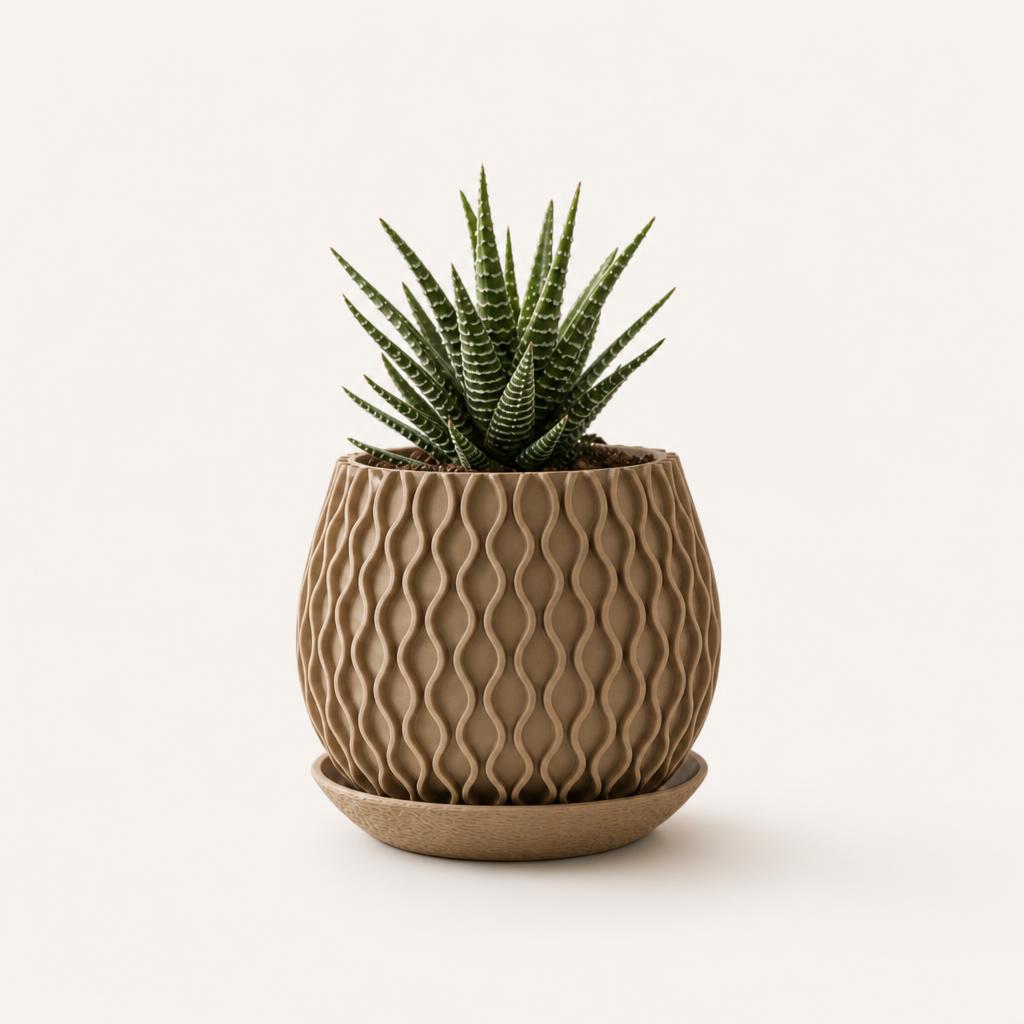
Indoors & outdoors
Hertz Decorative Wave Plant Pot with Drip Base
+8Drip tray
-
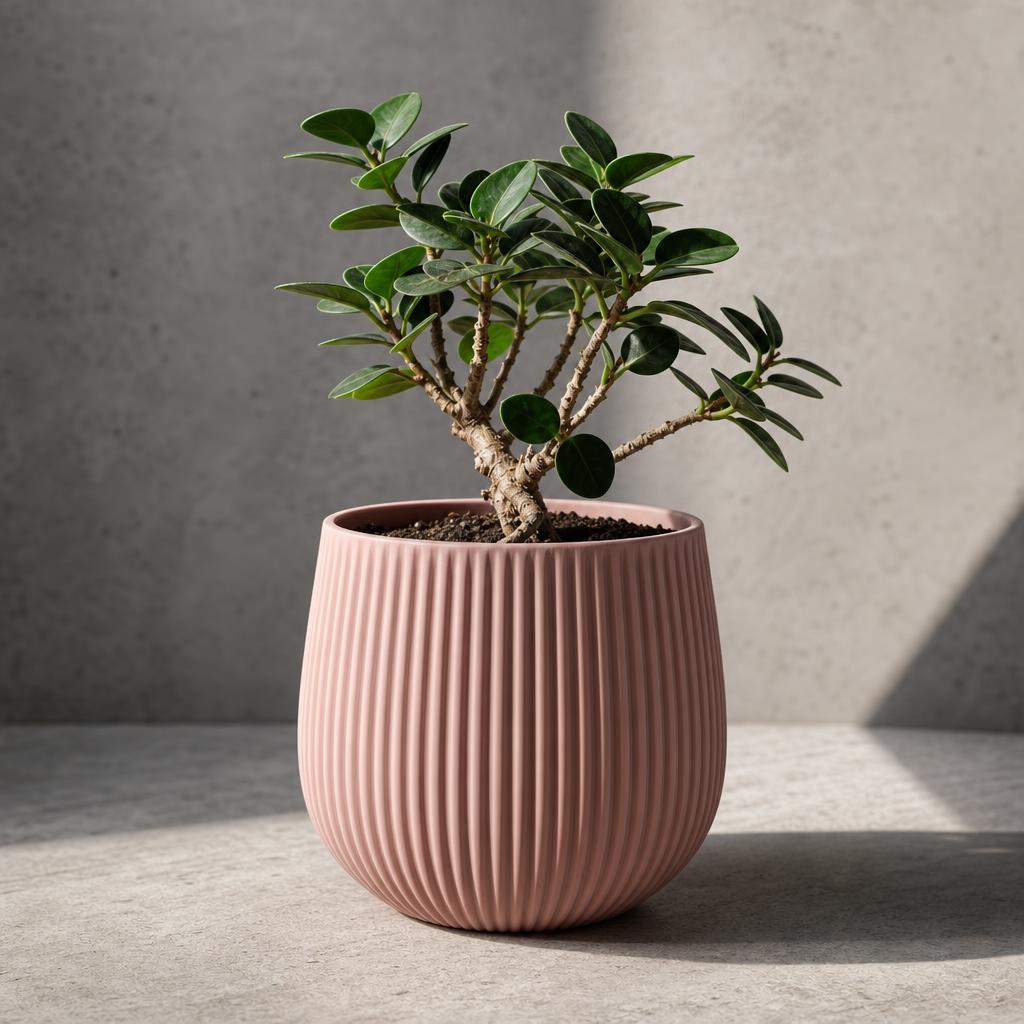
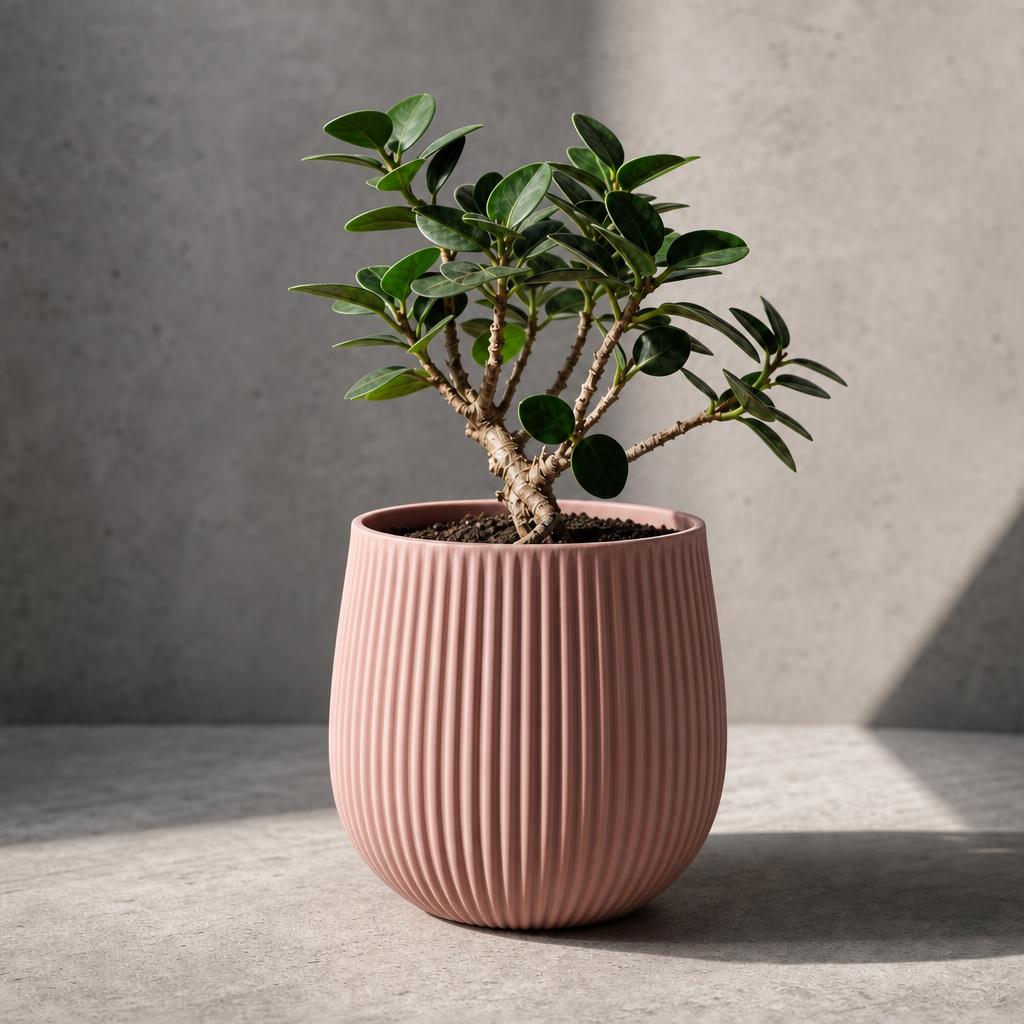
Indoors & outdoors
Modern Ribbed Plant Pot
+8Drainage holes
Questions
Good to know.
Can a plant live in a room with no windows?
Not on its own. Every plant needs light to make food. With a small LED grow light on a timer, a ZZ plant or devil’s ivy will do fine.
Which rooms get the least light in Australia?
South-facing rooms, because the sun sits to the north. Hallways and rooms shaded by verandas or other buildings are dim too.
Do grow lights work?
Yes. A small LED grow light 30 to 60 cm above the plant, on a timer for 8 to 12 hours a day, makes a big difference in a dark room.
How often should I water plants in low light?
Much less than in a bright room: every 2 to 4 weeks for most, less in winter. Check the soil first; if it’s still damp a few centimetres down, wait.
Which low-light plants are safe for pets?
The parlour palm is listed as non-toxic to cats and dogs by the ASPCA. The others here are toxic. See our pet-safe plants guide.
Keep reading
More grow guides.
- Kitchen herbs
- Home office
- Office
- Pet-safe plants
- Balcony
- Bathroom
- Gift ideas
- Pot sizes
- Which pot for your plant? (with the size guide)
Pet safety from the ASPCA plant list. Bunnings links open a search on bunnings.com.au; we’re not paid for them.